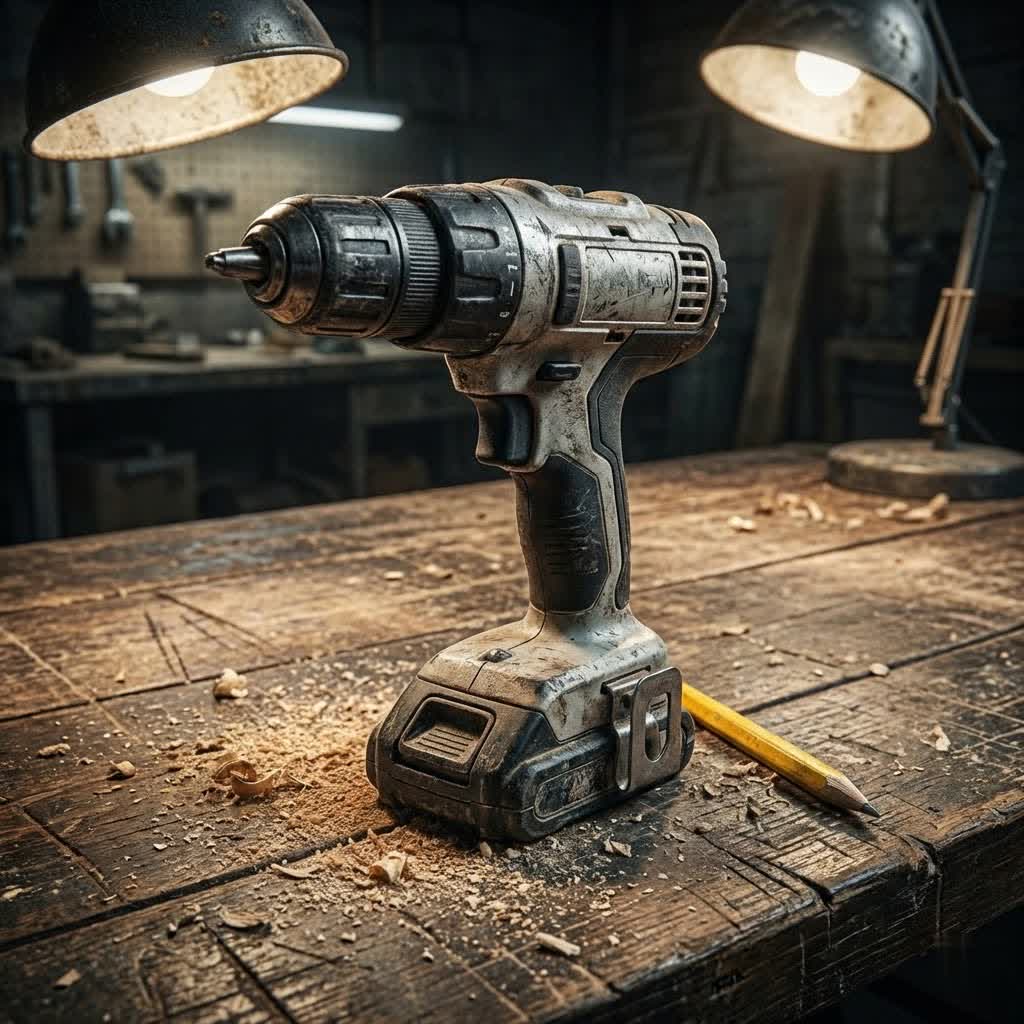
Every serious DIY enthusiast, homeowner, or professional tradesperson understands the pivotal role of a reliable drill in their toolkit. While cordless options have gained popularity, the Corded Electric Drill remains an undeniable workhorse, offering consistent power and unwavering performance for demanding tasks. This guide delves into everything you need to know about these steadfast tools, from their fundamental mechanics and diverse types to crucial selection factors and essential maintenance practices, ensuring you can confidently choose and utilize the ideal corded drill for your projects.
An Overview of Corded Electric Drills
A corded electric drill is a fundamental power tool designed to bore holes, drive screws, and even mix various materials like paint or cement. Unlike their battery-powered counterparts, corded drills rely on a direct electrical connection, providing a continuous and often superior power output. This constant energy supply translates to consistent performance without the worry of depleting batteries, making them ideal for prolonged use and heavy-duty applications.
The concept of drilling dates back thousands of years, with ancient civilizations employing simple bow drills. However, the true revolution arrived in 1895 when Wilhelm Fein patented the first handheld electric drill, fundamentally transforming construction and craftsmanship. Modern corded drills build upon this legacy, integrating advanced features, robust motors, and ergonomic designs to enhance efficiency and user comfort.
Corded drills come in several forms, each tailored for specific applications. From the versatile standard drill/driver for everyday tasks to powerful hammer drills and rotary hammers designed for masonry, and even specialized spade-handle drills for mixing, understanding these variations is key to harnessing their full potential.
Detailed Classification of Corded Electric Drills
The world of corded drills is diverse, with models specifically engineered for different materials and project requirements. Knowing the distinctions between these types is crucial for selecting the right tool for the job.
Standard Drill/Driver
The standard corded drill, often referred to as a drill/driver, is the most common and versatile type. It excels at creating holes in wood, plastic, and thin metals, as well as driving and removing screws.
- Advantages: Highly versatile for general tasks, typically lighter and easier to handle than specialized drills. Offers good speed control for precision work.
- Disadvantages: Lacks the hammering action for masonry and concrete. May not provide sufficient torque for very large fasteners or dense materials compared to an impact driver.
- Applications: Assembling furniture, hanging pictures, installing shelves, drilling pilot holes, and light to medium fastening tasks around the home or workshop.
Hammer Drill
A corded hammer drill combines the rotational motion of a standard drill with a rapid, pulsating hammering action. This dual functionality allows it to drill effectively into tougher materials.
- Advantages: Efficiently drills into masonry, brick, and concrete thanks to its percussive action. Can often be switched to drill-only mode for softer materials.
- Disadvantages: Can be heavier and more powerful than standard drills, making them less ideal for delicate tasks where the hammering action might cause damage.
- Applications: Installing anchors in brick walls, drilling for electrical conduits in concrete, and any project requiring penetration into hard mineral-based surfaces.
Rotary Hammer Drill
Stepping up in power from a hammer drill, the rotary hammer drill utilizes a piston mechanism to generate a significantly more powerful hammering action, making it exceptionally effective for heavy-duty concrete and masonry work.
- Advantages: Unparalleled power for breaking through the toughest concrete, stone, and rebar. Many models offer drill-only, hammer-only, and drill/hammer modes, providing extreme versatility for chiseling and demolition.
- Disadvantages: Typically larger, heavier, and more expensive than standard hammer drills. Overkill for most light-duty applications.
- Applications: Professional construction, extensive demolition of concrete or tile, heavy-duty chiseling, and drilling large-diameter holes in robust masonry.
Spade Handle Drill (Mixer)
Easily identifiable by its distinctive D-shaped or spade handle, these corded drills are engineered for high-torque applications at lower speeds, making them perfect for mixing dense materials.
- Advantages: Designed for maximum control and leverage when dealing with high-viscosity substances like concrete, mud, or plaster. High torque output.
- Disadvantages: Generally operates at much lower RPMs (e.g., 0-700 RPM), making them less suitable for general high-speed drilling tasks. Can be relatively heavy.
- Applications: Mixing drywall mud, paint, cement, or mortar. Also suitable for drilling large holes in wood where significant torque is required.
Magnetic Drill
While more specialized and often found in industrial settings, a magnetic drill (or mag drill) is a type of corded drill that uses a powerful electromagnetic base to firmly attach to ferrous metal surfaces.
- Advantages: Provides exceptional stability and precision for drilling into thick metal plates or beams. Ideal for overhead or vertical drilling on metal structures.
- Disadvantages: Heavy, highly specialized, and not suitable for non-ferrous materials or general drilling.
- Applications: Fabrication, structural steel work, and other industrial applications where precise, heavy-duty metal drilling is necessary.
Corded vs. Cordless Drills: A Comparative Table
Choosing between a corded and cordless drill is a common dilemma. Here’s a breakdown of their key differences to help you decide:
| Feature | Corded Electric Drill | Cordless Drill |
|---|---|---|
| Power | Consistent, often higher power (e.g., 7-10+ amps), more torque, no power degradation during use. | Power decreases as battery depletes. Limited by battery voltage and amperage. |
| Run Time | Unlimited, as long as plugged into an outlet. | Limited by battery life, requires recharging. |
| Mobility | Restricted by cord length and proximity to power outlets. | Excellent mobility, usable anywhere without an outlet. |
| Weight | Can be lighter as there’s no heavy battery pack. | Can be heavier due to the battery pack. |
| Cost | Generally lower upfront cost, no need for expensive batteries or chargers. | Higher upfront cost due to batteries and charger. Batteries require replacement over time. |
| Maintenance | Primarily cord inspection and general tool cleaning. | Battery health management (charging, storage) in addition to tool cleaning [5 (search result)]. |
| Ideal Use Case | Heavy-duty, prolonged tasks, mixing, stationary work. | Light-to-medium tasks, quick jobs, remote locations, tight spaces. |
Guide to Choosing the Right Corded Electric Drill
Selecting the perfect corded drill involves aligning its capabilities with your specific project demands. Consider these factors to make an informed decision:
Assess Your Needs
Before anything else, pinpoint the primary tasks and materials you’ll be working with. Are you mostly drilling into wood for cabinetry, or do you anticipate heavy masonry work? Will it be for short, frequent tasks, or long, continuous projects? Understanding your typical use will narrow down your options significantly.
Budget Considerations
Corded drills typically offer more power for your money compared to cordless equivalents. Determine a comfortable budget range, keeping in mind that investing in a quality tool often translates to better performance and longevity.
Key Technical Specifications
Evaluating a drill’s specifications helps you understand its raw capability and suitability for different applications.
- Motor Power (Amps): Measured in amps for corded drills, this indicates the motor’s strength. For general DIY, 5-8 amps is sufficient. For heavy-duty tasks like drilling into masonry or mixing, look for 8-10 amps or higher [1, 2 (search result 4 for types)].
- Speed (RPM) & Variable Speed Control: Revolutions Per Minute (RPM) denotes how fast the bit spins. Variable speed control is crucial, allowing you to adjust the speed based on the material (slower for metal/concrete to prevent overheating, faster for wood). A lock-on button is a valuable feature for extended use.
- Torque: This refers to the rotational force. Higher torque is essential for driving large screws and drilling into tough materials without stalling.
- Chuck Size & Type: The chuck holds the drill bit. Common sizes are 3/8-inch (for general use) and 1/2-inch (for heavier-duty tasks and larger bits).
- Keyed Chucks: Require a chuck key to tighten and loosen, providing a very secure grip for high-torque applications.
- Keyless Chucks: Hand-tightened for convenience, quicker bit changes, and common on lighter-duty drills.
- Functions: Some drills offer specialized modes beyond standard drilling, such as hammer mode for masonry, or hammer-only mode for chiseling.
Brand Reputation and Reliability
Opting for established brands known for durable power tools often provides assurance of quality and performance. Researching brand reputation, warranty policies, and customer support can save headaches down the line.
Ergonomics and Additional Features
Comfort and convenience are not minor details, especially during prolonged use.
- Comfortable Grip & Balance: Look for ergonomic designs, soft-grip moldings, and a well-balanced tool to reduce fatigue.
- Auxiliary Handle: Many heavy-duty corded drills include an adjustable auxiliary handle for enhanced control and safety, particularly during high-torque operations.
- Additional Features: Integrated LED lights illuminate the workspace, while a belt clip offers hands-free convenience. A storage case helps protect your investment.
Safe Operation and Maintenance Tips for Your Corded Drill
Proper usage and regular maintenance are paramount to ensuring the longevity and safe operation of your corded electric drill.
Safe Usage Practices
Safety should always be your top priority when operating any power tool.
- Wear Personal Protective Equipment (PPE): Always don safety goggles, gloves, and, for noisy applications, ear protection [5 (search result)].
- Inspect Before Use: Check the power cord for any damage, cuts, or frayed wires. Ensure the drill bit is correctly inserted and the chuck is securely tightened [5 (search result)]. Replace dull or damaged bits immediately.
- Secure Your Workpiece: Use clamps, a vice, or other securing methods to prevent the material from slipping or rotating during drilling, which can cause kickback and injury.
- Maintain a Firm Grip: Always use both hands if the drill is equipped with an auxiliary side handle for better control, especially when tackling tough materials.
- Clear Workspace: Remove any obstructions, debris, or flammable materials from your work area to minimize risks [5 (search result)].
- Avoid Overloading: Do not apply excessive pressure on the drill. Let the tool and bit do the work. Overloading can lead to motor damage and overheating.
- Dress Appropriately: Avoid loose clothing, jewelry, or long hair that could get entangled in the rotating chuck or drill bit.
Maintenance for Longevity
Regular care will significantly extend the life and efficiency of your corded drill.
- Clean After Every Use: Wipe down the entire drill with a clean, dry cloth to remove dust, debris, and grime. Use a small brush or compressed air to clean out the chuck, ventilation openings, and any crevices where dust might accumulate. This prevents overheating and internal component damage.
- Inspect Components Regularly: Periodically check the power cord for any wear or damage, as well as the chuck, gears, and carbon brushes (if applicable) for signs of wear.
- Lubrication: If recommended by the manufacturer, apply a few drops of appropriate lubricant to moving parts to ensure smooth operation and prevent friction, but avoid over-lubricating [5 (search result)].
- Proper Storage: Store your drill in a dry, dust-free environment, ideally in its original case or a dedicated toolbox. Protect it from moisture, which can cause rust and damage internal mechanisms.
- Sharp Bits: Always use sharp drill bits. Dull bits force the drill to work harder, leading to motor strain, overheating, and poor results. Sharpen or replace bits as needed.
- Prevent Overheating: Allow the drill to rest during long, continuous use, especially when working with hard materials. Ensure vents are clear to allow proper airflow.
Conclusion
The corded electric drill remains an indispensable tool for its unwavering power, consistent performance, and cost-effectiveness. Whether you’re a seasoned professional or a dedicated DIYer, choosing the right model and adhering to proper safety and maintenance practices will empower you to tackle a vast array of projects with confidence and efficiency. Investing in a high-quality corded drill means investing in a reliable partner that will serve your workshop needs for years to come.
What projects are you ready to tackle with your newfound corded drill knowledge?
Frequently Asked Questions
What is the main advantage of a corded drill over a cordless one?
The primary advantage of a corded drill is its continuous power supply, delivering consistent high power and torque without any drop in performance due to battery depletion. This makes it ideal for heavy-duty and prolonged tasks.
Can a corded drill be used for heavy-duty tasks?
Absolutely. Corded drills are often more powerful than cordless models, with higher amperage motors and greater torque capabilities, making them excellent for drilling into tough materials like concrete, metal, and dense wood.
What chuck size is best for general home use?
For most general home improvement and DIY tasks, a 3/8-inch chuck size is sufficient. However, if you anticipate heavy-duty work or using larger drill bits, a 1/2-inch chuck provides more versatility and strength.
How can I extend the life of my corded drill?
To extend your corded drill’s lifespan, regularly clean it after use, inspect the power cord for damage, ensure drill bits are sharp, store it in a dry, dust-free place, and avoid overloading the motor by taking breaks during prolonged use.
Is a hammer drill always better than a standard corded drill?
Not necessarily. While a hammer drill is essential for drilling into masonry and concrete, its hammering action is overkill and potentially damaging for softer materials like wood or plastic. A standard drill is often preferred for general-purpose drilling and driving screws.