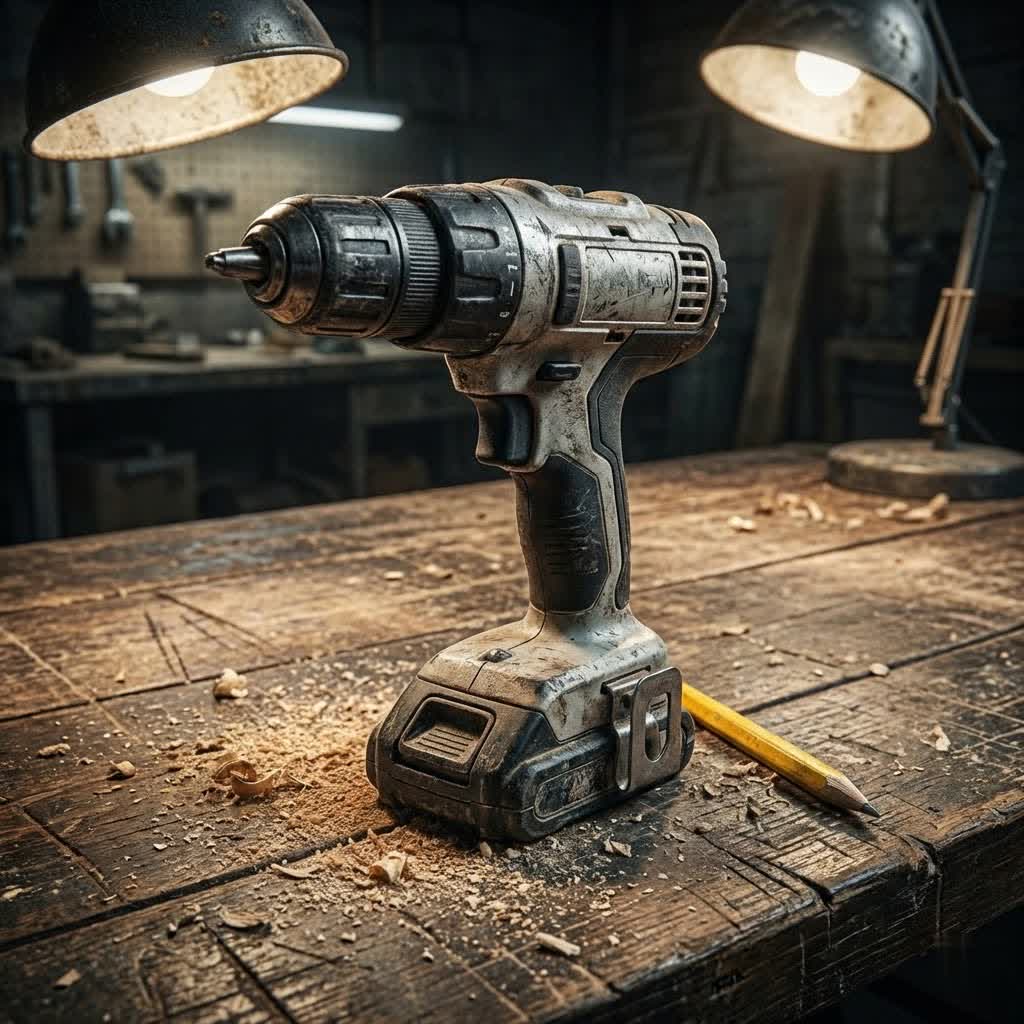
Whether you’re a seasoned DIY enthusiast or just starting to tackle home projects, a Small Cordless Electric Drill is an indispensable tool that offers unmatched convenience and versatility. Gone are the days of wrestling with cumbersome cords or bulky, heavy machinery. Modern advancements in battery technology have transformed these compact powerhouses, making them lighter, more powerful, and incredibly adaptable for a myriad of tasks around the home or workshop. This guide will walk you through everything you need to know to select the perfect small cordless drill, ensuring your projects are completed with ease and precision.
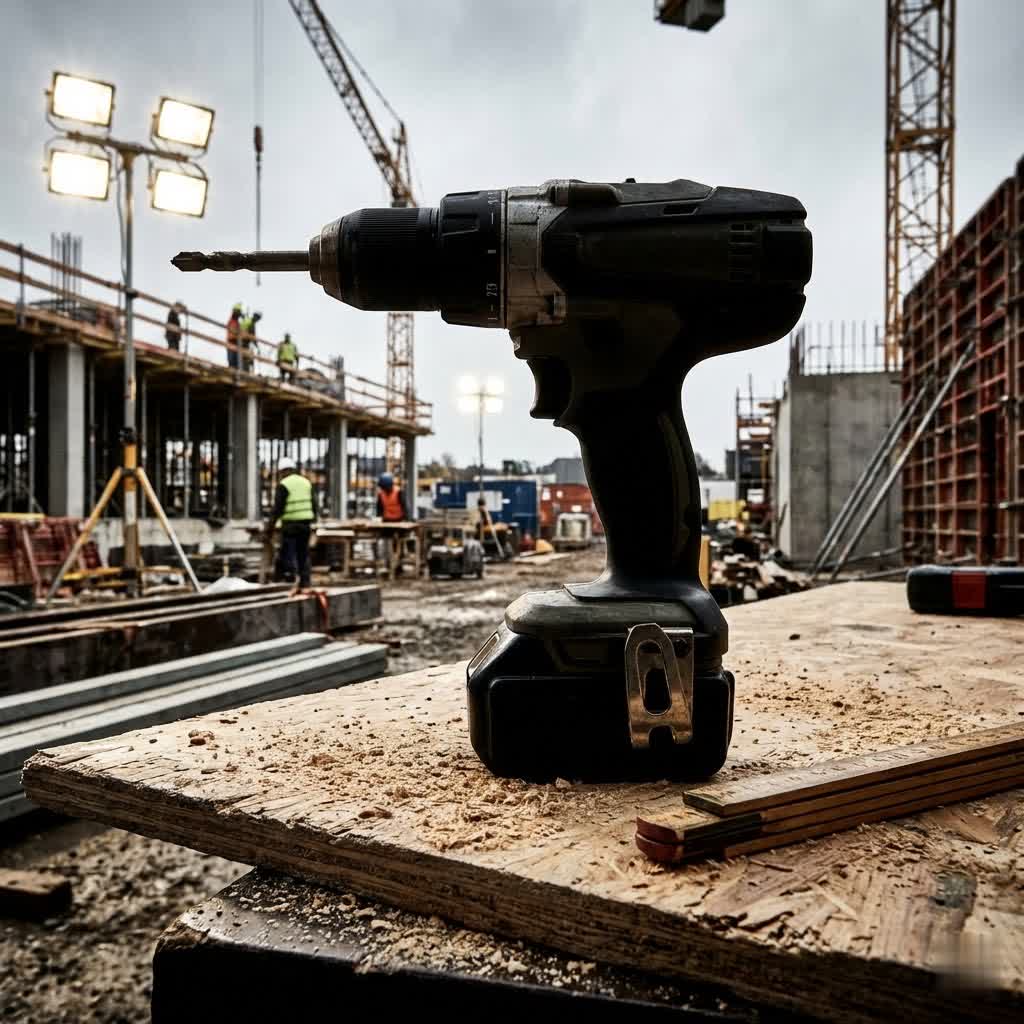
Overview of Small Cordless Electric Drills
An electric drill is a fundamental power tool designed to drill holes and drive fasteners. Its evolution from large, corded predecessors to today’s compact, cordless models marks a significant leap in user convenience and efficiency. Small cordless electric drills are battery-powered tools specifically engineered for portability, lightweight handling, and access to tight spaces, while still delivering ample power for most common household and light-duty professional applications.
These drills typically combine the functions of a drill (for creating holes) and a driver (for inserting screws and fasteners), often featuring a clutch mechanism to prevent overtightening and stripping. The primary advantage of a small cordless model lies in its freedom from electrical outlets, allowing you to work anywhere, from a remote corner of your garden to high up on a ladder, without tripping hazards or the need for extension cords. Their reduced size and weight also significantly cut down on user fatigue during extended use or overhead work, making them a favorite for everyday tasks and detailed projects.
Detailed Classification of Small Cordless Electric Drills
Small cordless electric drills aren’t a one-size-fits-all category; they encompass several variations tailored to specific needs and tasks. Understanding these distinctions is key to choosing the ideal tool for your arsenal.
Compact Drill/Drivers
These are the most common type of small cordless electric drills, serving as the workhorse for general DIY and light professional tasks.
- Features: Compact drill/drivers are designed primarily for drilling holes in wood, plastic, and light metal, and for driving screws. They typically feature a 3/8-inch keyless chuck, which allows for quick and easy bit changes. Many operate on 12V battery platforms, offering a balance of power and lightweight design, though some higher-performance compact models may utilize 18V/20V batteries in a reduced form factor. They often include variable speed triggers and multiple clutch settings to control torque, preventing damage to delicate materials or fasteners.
- Advantages: Their small size makes them ideal for intricate work, assembling furniture, installing shelves, and general repairs where maneuverability is paramount. They are typically lighter, reducing arm fatigue.
- Disadvantages: While capable for most household tasks, they may lack the extreme power needed for heavy-duty drilling into dense materials or driving very large fasteners.
- Applications: Perfect for assembling flat-pack furniture, hanging pictures, installing curtain rods, drilling pilot holes, and light carpentry.
|
Our Picks for the Best Electric Drill in 2026
We may earn a commission when you use one of our links to make a purchase.
|
||
| Num | Product | Action |
|---|---|---|
| 1 | 20V Cordless Drill, Electric Power Drill Set with Battery Charger and Carrying Case, 3/8” Keyless Chuck, 2 Variable Speed, 18+3 Torque, 72pcs Driver Bits and Belt Hook, Red |

|
| 2 | DEWALT 20V MAX Cordless Drill Driver Set, Electric Drill, Brushless 1/2 In 2 Speed, 2.0 Ah Battery and Charger Included, LED Light (DCD777D1) |
|
| 3 | DEWALT 20V Max Cordless Drill Driver Set, 2 Speed, High Performance Motor, Includes 2 XR 1.3Ah Li-Ion Batteries, Charger and Contractor Bag (DCD771C2) |
|
| 4 | Cordless Drill Set, VIWKO 20V Power Drill with Power Pack 2.0Ah and Charger, 3/8-Inch Keyless Chuck Electricdrill, 25+1 Torque, 42pcs Drilldriver Bits/Screws for DIY Projects (Red) |
|
| 5 | COMOWARE 20V Cordless Drill, Electric Power Drill Set with 1 Battery & Charger, 3/8” Keyless Chuck, 2 Variable Speed, 266 In-lb Torque, 25+1 Position and 34pcs Drill/Driver Bits |
|
| 6 | BLACK+DECKER 20V MAX* POWERCONNECT Cordless Drill Driver Kit with Drill Bit Set and Sockets, 100 pc. Tool Kit for Home, Battery and Charger Included ,Orange (BDC120VA100) |
|
| 7 | PULITUO'S 20V Cordless Drill/Driver, Electric Screwdriver - 2 Batteries, 30Nm, 21+1 Torque, 2 Speed, Keyless 3/8" Chase Drill with LED Light, Kit for Home (Green) |
|
| 8 | FADAKWALT Cordless Drill Set,12V Power Drill Set with Battery and Charger, Electric Driver/Drill Bits, 3/8'' Keyless Chuck,21+1 Torque Setting, 180 inch-lbs, with LED Electric Drill Set (Green) |
|
| 9 | AVID POWER 20V MAX Lithium lon Cordless Drill Set, Power Drill Kit with Battery and Charger, 3/8-Inch Keyless Chuck, Variable Speed, 16 Position and 22pcs Drill Bits (Red) |
|
| 10 | Hoteche 320W 10mm Torque Drill, 19+1 Torque Settings Corded Electric Drill for Metal (10mm) & Wood (20mm), Yellow, Color Box Packaging |
|
Sub-Compact Hammer Drills
A sub-compact hammer drill integrates the hammer function into a smaller, lighter body, offering a solution for light masonry work without the bulk of a full-sized hammer drill.
- Features: In addition to standard drilling and driving capabilities, these drills can engage a “hammer” mode. This mode rapidly pulsates the drill bit forward and back while it rotates, effectively chipping away at tough materials like brick, concrete, or mortar. Despite the added functionality, sub-compact models retain a relatively small footprint and lighter weight compared to their heavy-duty counterparts, often running on 18V/20V compact battery systems.
- Advantages: Provides greater versatility, allowing users to tackle light masonry tasks that a standard drill/driver couldn’t handle, such as mounting fixtures into brick walls.
- Disadvantages: While more capable than a drill/driver for masonry, they are not designed for extensive or heavy-duty concrete demolition. The hammer mechanism adds a slight increase in weight and complexity compared to a pure drill/driver.
- Applications: Installing anchors in concrete, drilling small holes in brick or block, light remodeling projects requiring occasional masonry work.
Mini/Rotary Tools with Drilling Capabilities
At the smallest end of the spectrum, certain mini or rotary tools offer precision drilling capabilities alongside other functions.
- Features: These very small, often pen-sized, tools are designed for extreme precision and detailed work. They typically use very small chucks or collets to hold tiny drill bits, grinding stones, polishing wheels, and engraving tips. They are generally low-voltage (e.g., 3.6V, 7.2V) and exceptionally lightweight.
- Advantages: Unparalleled precision for delicate tasks, highly portable, and incredibly versatile for crafts and hobbies beyond just drilling.
- Disadvantages: Limited power and torque, not suitable for construction or general repair work. Only capable of drilling small diameter holes in soft materials.
- Applications: Engraving, polishing jewelry, detailed craft projects, model making, minor repairs on electronics, or intricate woodworking.
Comparing Small Cordless Electric Drills: Key Factors
Choosing a small cordless electric drill involves weighing several critical specifications against your intended use. Here’s what to consider:
| Feature | 12V Compact Drill/Driver | 18V/20V Compact Drill/Driver | Mini Rotary Tool with Drill |
|---|---|---|---|
| Primary Use | Light DIY, furniture assembly, small repairs | General DIY, light construction, more demanding tasks | Crafts, fine detail work, engraving |
| Power (Torque) | Moderate, sufficient for most screws and small holes | Good, handles larger fasteners and harder materials | Low, for delicate materials only |
| Weight | Very light (often under 2.5 lbs) | Light to moderate (2.5-4 lbs) | Extremely light (ounces) |
| Battery Life | Good for occasional use, shorter runtime | Excellent, longer runtime, often interchangeable with other tools | Varies, usually shorter, smaller batteries |
| Chuck Size | Primarily 3/8-inch | Often 1/2-inch for greater versatility | Very small collets/chucks for tiny bits |
| Ergonomics | Excellent for tight spaces, reduced fatigue | Good, slightly larger but still manageable | Pen-like grip for precision |
| Price Range | Entry-level to mid-range | Mid-range to higher-end | Low to mid-range |
- Voltage (V) and Amp-Hours (Ah): These two figures indicate a drill’s power and runtime. Voltage (e.g., 12V, 18V/20V) roughly correlates to the tool’s raw power. Higher voltage generally means more torque and ability to drill through tougher materials. Amp-hours (Ah) indicate battery capacity—a higher Ah rating means longer run time between charges. For small cordless drills, a 12V system is often sufficient for basic home use, offering superb lightweight handling, while compact 18V/20V models provide a boost in power for slightly more demanding tasks without excessive bulk. Many users find a kit with two batteries invaluable for uninterrupted work.
- Brushless Motors: Drills equipped with brushless motors offer several advantages. They are more efficient, meaning longer battery life and more power delivered to the task. They also generate less heat and have a longer lifespan, as there are no carbon brushes to wear out. While often found in higher-end models, the benefits in a compact tool, especially extended runtime, are significant.
- Speed (RPM) and Torque: Look for models with variable speed settings, controlled by a pressure-sensitive trigger. This allows for precise control, crucial when starting holes or driving screws. Higher RPM is better for drilling, while higher torque is essential for driving screws or drilling into tougher materials. Many drills feature a two-speed gearbox (high speed/low torque for drilling, low speed/high torque for driving) and a multi-torque clutch to adjust the twisting force.
- Ergonomics: For a small cordless drill, comfort is paramount. The tool should feel balanced in your hand, and the grip should be comfortable, ideally with some rubberized overmold for better control. Consider the handle style (T-handle for balance, pistol grip for direct inline push) and the overall weight, especially if you plan on extended use or overhead applications.
- Chuck Size and Type: The chuck holds the drill bit. Most compact drills feature a 3/8-inch keyless chuck, which is suitable for a wide range of common bits. Some larger compact models may offer a 1/2-inch chuck for accepting bigger bits. Keyless chucks are standard and offer convenient, tool-free bit changes, often with an automatic chuck lock feature for added ease.
How to Choose the Right Small Cordless Electric Drill
Selecting the perfect small cordless electric drill involves a clear understanding of your needs and the features that best meet them.
Identify Your Usage Needs
Start by asking yourself:
- What are my primary projects? Are you assembling furniture, hanging decor, performing light repairs, or engaging in intricate crafts?
- What materials will I be working with most often? Wood, drywall, plastic, light metal, or occasional brick/concrete?
- How often will I use the drill? Daily, weekly, or just a few times a year?
For simple household tasks and occasional DIY, a 12V compact drill/driver is likely ideal. If you anticipate more frequent use, tougher materials, or occasional light masonry, a compact 18V/20V hammer drill might be a better fit. For precision crafts, a mini rotary tool with drilling capabilities is specialized for fine detail.
Budget Considerations
Small cordless drills are available across a wide price range. Entry-level models offer basic functionality at an affordable price, suitable for infrequent use. Mid-range options provide a good balance of features, power, and durability for regular DIYers. Higher-end models, often with brushless motors and advanced features, represent a greater investment but offer superior performance, longevity, and sometimes compatibility with larger tool ecosystems. Remember to factor in the cost of batteries and chargers if they are not included in the kit, and consider kits that come with two batteries for continuous work.
Essential Technical Specifications
Beyond voltage and Ah, pay attention to:
- Speed (RPM): Ensure it has variable speed settings for control.
- Torque: A multi-clutch system (e.g., 15+ settings) is vital for driving screws without over-tightening.
- Chuck Quality: A reliable keyless chuck that grips bits firmly is crucial.
- Additional Functions: Decide if a hammer function is necessary for your projects.
Brand Reputation and Reliability
Investing in a reputable brand often translates to better product quality, reliability, and customer support. Brands like DeWalt, Milwaukee, Makita, Bosch, and Ryobi are well-regarded for producing high-quality compact cordless drills. Researching user reviews can provide valuable insights into a model’s performance and durability in real-world scenarios.
Must-Have Supplementary Features
Modern small cordless drills often come with features that enhance usability:
- Integrated LED Light: Illuminates the workspace, which is especially useful in dimly lit areas or when working inside cabinets.
- Belt Clip: Allows for easy temporary storage and quick access while working.
- Battery Level Indicator: Helps you monitor battery life, preventing unexpected power loss during a task.
- Compatibility with Tool Systems: If you own other cordless tools from a specific brand, choosing a drill that uses the same battery platform can save money and simplify battery management.
Safe Usage and Maintenance Tips for Your Small Cordless Electric Drill
To ensure your small cordless electric drill serves you reliably and safely for years, proper usage and maintenance are essential.
- Select the Right Bit: Always match the drill bit or driver bit to the material and fastener you are working with. Using the wrong bit can damage the material, the bit, or even the drill itself.
- Wear Protective Gear: Safety glasses are non-negotiable when operating any power tool to protect against flying debris. Gloves can improve grip and protect hands.
- Secure Your Workpiece: Ensure the material you are drilling into is clamped or held securely to prevent it from spinning or shifting, which can lead to injury or an imprecise result.
- Start Slow, Then Accelerate: Use the variable speed trigger to start drilling or driving slowly, then gradually increase speed. This gives you better control and helps prevent stripping screws or walking bits.
- Apply Appropriate Pressure: Let the drill do the work. Excessive force can overheat the motor, dull bits, or damage the material.
- Battery Care:
- Charge Regularly: Charge batteries after each significant use to ensure they are ready for the next project.
- Avoid Overcharging/Over-discharging: Modern chargers often have protection against overcharging. For optimal battery life, avoid completely draining lithium-ion batteries too frequently.
- Store Properly: Store batteries in a cool, dry place, away from extreme temperatures. Do not store fully discharged.
- Cleaning and Storage:
- Clean After Use: Wipe down your drill after each use to remove dust and debris. Use compressed air to clear vents.
- Store in Case: Keep your drill and accessories in its designated case to protect it from damage and keep everything organized.
- Inspect Regularly: Periodically check the chuck, cord (if applicable), and housing for any signs of wear or damage.
“A small cordless drill isn’t just a convenience; it’s a gateway to tackling more projects with less effort. Its true power lies in its accessibility and the confidence it gives users to create and repair.” – Admin, ReviewsByM.com
Conclusion
A small cordless electric drill is a powerful and versatile tool that belongs in every homeowner’s and DIYer’s toolkit. Its compact size, lightweight design, and freedom from power outlets make it incredibly practical for a wide array of tasks, from assembling furniture to intricate craft projects. By carefully considering your specific needs, understanding key technical specifications, and prioritizing comfort and reliability, you can confidently choose a model that empowers you to tackle any project with precision and ease. Embrace the convenience and capability of these compact powerhouses, and unlock a world of possibilities for your next project.
What small project are you excited to tackle with your new cordless drill?
Frequently Asked Questions
What is the ideal voltage for a small cordless electric drill?
For most light-duty household tasks and DIY projects, a 12V small cordless drill offers an excellent balance of power, weight, and maneuverability. If you anticipate more demanding applications or occasional light masonry, a compact 18V/20V model provides increased power without excessive bulk, making it a versatile choice.
Can a small cordless drill be used for masonry?
Some small cordless drills, specifically “sub-compact hammer drills,” include a hammer function that allows them to drill into light masonry materials like brick or concrete block. However, they are not designed for heavy-duty concrete work, which requires a more powerful, dedicated hammer drill or rotary hammer.
What’s the difference between a 3/8-inch and 1/2-inch chuck on a compact drill?
The chuck size refers to the maximum diameter of the drill bit shank that the drill can accept. A 3/8-inch chuck is common on most compact drills and is suitable for a wide range of everyday bits. A 1/2-inch chuck, often found on slightly larger compact models, can accommodate larger bits, offering greater versatility for heavier drilling tasks.
How do I maximize the battery life of my cordless drill?
To maximize battery life, especially for lithium-ion batteries, avoid fully discharging them regularly. Charge them after significant use and store them in a cool, dry place away from extreme temperatures. While modern batteries have internal protection, using a smart charger designed for your battery type also helps prevent overcharging.
Are brushless motors worth the extra cost in a small cordless drill?
Yes, brushless motors are generally worth the investment. They are more efficient, delivering more power and longer runtimes per charge. They also have a longer lifespan due to less heat generation and no wearable brushes. For a small cordless drill, this means a more powerful, durable, and longer-lasting tool that performs better in tight spaces.