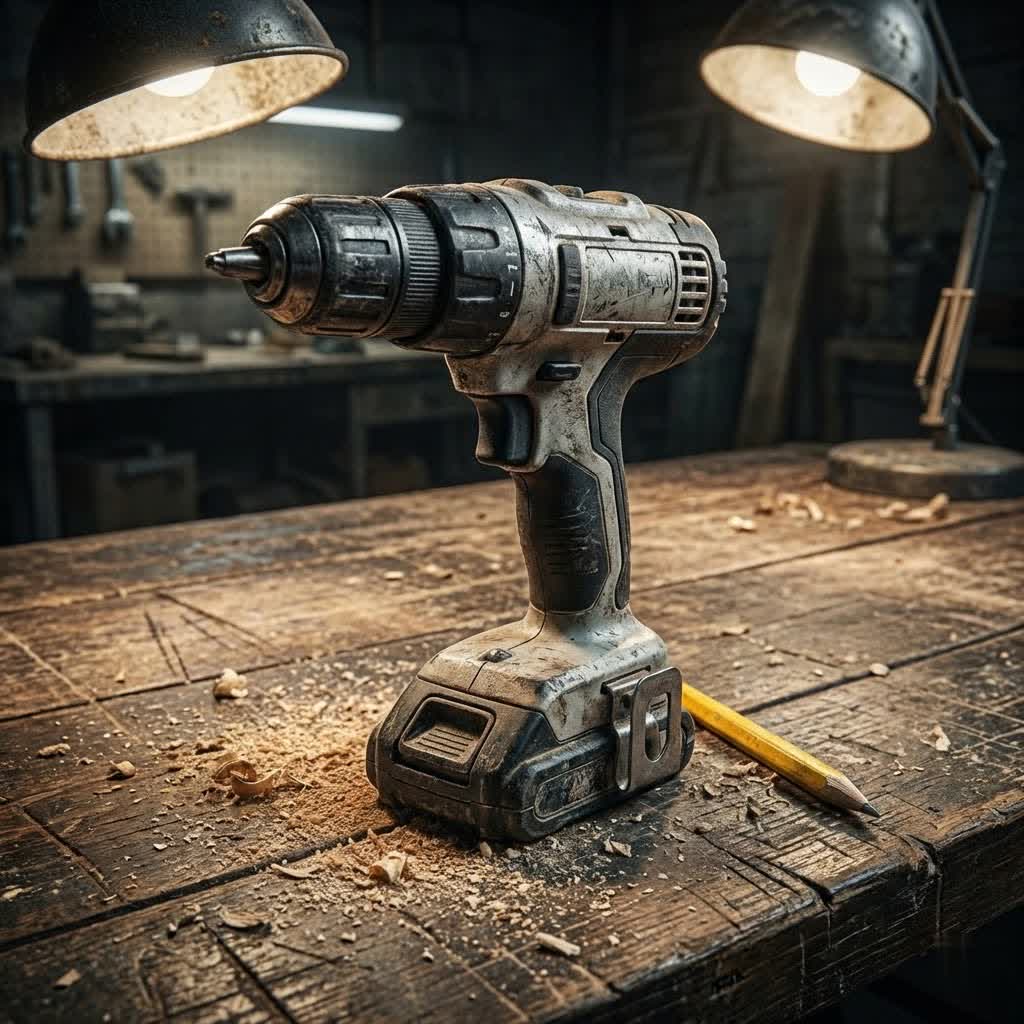
Are you tired of switching between multiple tools for drilling and driving screws? Imagine a single powerhouse that handles both tasks with precision and efficiency, transforming your project workflow. The electric drill/driver is exactly that versatile workhorse, designed to be the cornerstone of any homeowner’s or professional’s toolkit, seamlessly transitioning from boring holes to driving fasteners with ease. This comprehensive guide will delve into everything you need to know about these indispensable tools, from their core functionality and various types to selecting the perfect model for your specific needs and keeping it in top condition.
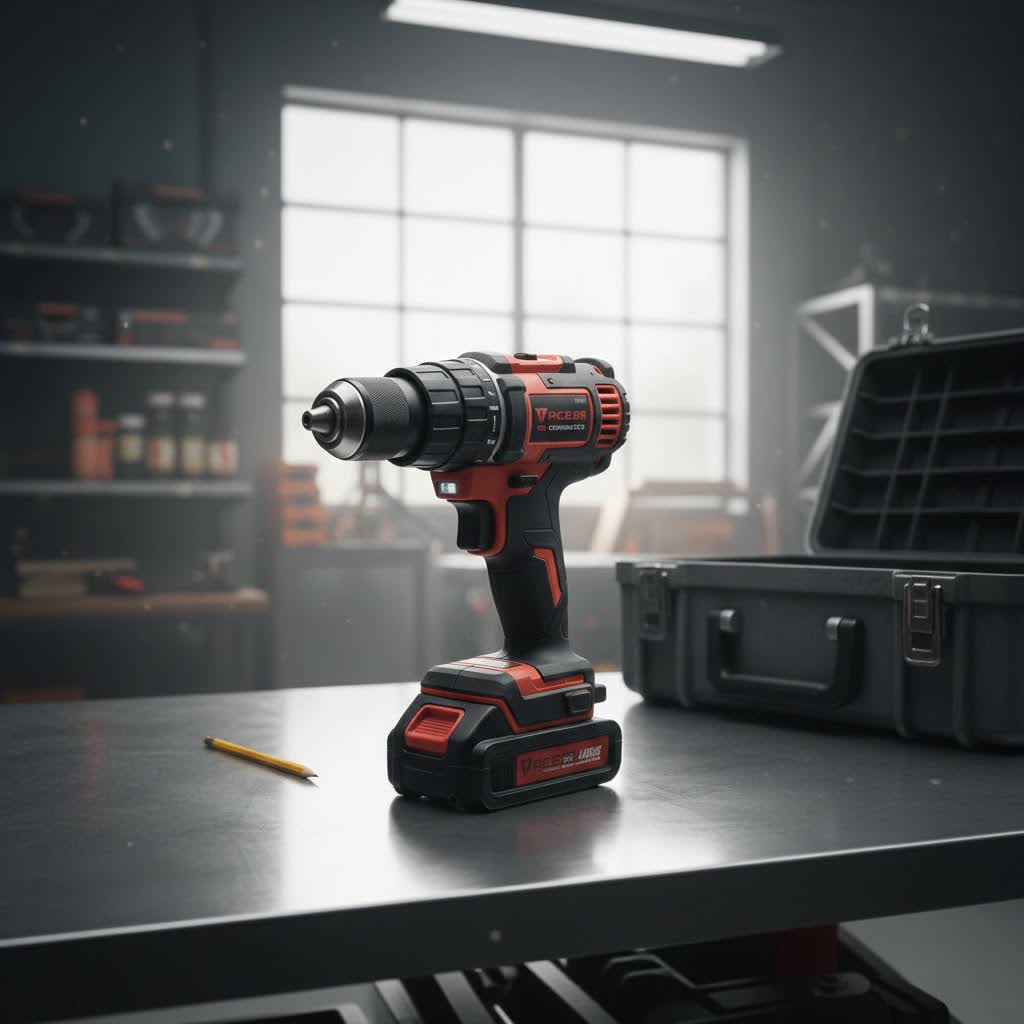
The Evolution and Functionality of Electric Drill/Drivers
The modern electric drill/driver represents a significant leap from its single-purpose ancestors. Originally, drills were solely for making holes, and screwdrivers were manual tools. However, innovation brought forth a hybrid, integrating a powerful motor with a chuck that accepts both drill bits and screwdriver bits. This convergence created the versatile tool we know today as the drill/driver or cordless drill. These tools operate on a simple principle: an electric motor rotates a chosen bit, controlled by a trigger for variable speed and often featuring a clutch mechanism to prevent overtightening screws.
Unlike dedicated electric screwdrivers, which are typically smaller, lighter, and designed for low-torque, precise fastening in delicate materials or electronics, a drill/driver is built for a broader range of tasks. While an electric screwdriver might assist with assembling flat-pack furniture or hanging light picture frames, a drill/driver can confidently tackle everything from hanging heavy shelving and building robust decks to drilling into wood, metal, or even masonry. This adaptability makes them far more powerful, with higher torque and faster RPM capabilities, ensuring they can handle both driving long, stubborn screws and boring substantial holes.
Types of Electric Drills and Their Dual Capabilities
The landscape of electric drills offers various specialized types, each with unique strengths. Understanding these distinctions is crucial for identifying which tool best serves your combined drilling and screwdriving demands.
Standard Drill/Driver (Cordless Drill)
The standard drill/driver is the most common and arguably the most versatile “Electric Screwdriver With Drill” you’ll find. It excels at general-purpose tasks around the home and workshop.
- Advantages: Offers excellent control for both drilling holes in wood, metal, and plastic, and driving screws with adjustable torque settings. It’s relatively lightweight and well-balanced for comfortable use over extended periods.
- Disadvantages: Lacks the hammering action for masonry drilling and the high-impact bursts of an impact driver for very tough fasteners.
- Applications: Ideal for assembling furniture, installing fixtures, hanging decorations, basic woodworking, and minor repair jobs.
- Comparison: This is your everyday workhorse, providing a balanced performance for most common drilling and screwdriving applications.
|
Our Picks for the Best Electric Drill in 2026
We may earn a commission when you use one of our links to make a purchase.
|
||
| Num | Product | Action |
|---|---|---|
| 1 | Hoteche 320W 10mm Torque Drill, 19+1 Torque Settings Corded Electric Drill for Metal (10mm) & Wood (20mm), Yellow, Color Box Packaging |

|
| 2 | DEWALT 20V Max Cordless Drill Driver Set, 2 Speed, High Performance Motor, Includes 2 XR 1.3Ah Li-Ion Batteries, Charger and Contractor Bag (DCD771C2) |
|
| 3 | Cordless Drill Set, VIWKO 20V Power Drill with Power Pack 2.0Ah and Charger, 3/8-Inch Keyless Chuck Electricdrill, 25+1 Torque, 42pcs Drilldriver Bits/Screws for DIY Projects (Red) |
|
| 4 | BLACK+DECKER 20V MAX* POWERCONNECT Cordless Drill Driver Kit with Drill Bit Set and Sockets, 100 pc. Tool Kit for Home, Battery and Charger Included ,Orange (BDC120VA100) |
|
| 5 | COMOWARE 20V Cordless Drill, Electric Power Drill Set with 1 Battery & Charger, 3/8” Keyless Chuck, 2 Variable Speed, 266 In-lb Torque, 25+1 Position and 34pcs Drill/Driver Bits |
|
| 6 | PULITUO'S 20V Cordless Drill/Driver, Electric Screwdriver - 2 Batteries, 30Nm, 21+1 Torque, 2 Speed, Keyless 3/8" Chase Drill with LED Light, Kit for Home (Green) |
|
| 7 | FADAKWALT Cordless Drill Set,12V Power Drill Set with Battery and Charger, Electric Driver/Drill Bits, 3/8'' Keyless Chuck,21+1 Torque Setting, 180 inch-lbs, with LED Electric Drill Set (Green) |
|
| 8 | 20V Cordless Drill, Electric Power Drill Set with Battery Charger and Carrying Case, 3/8” Keyless Chuck, 2 Variable Speed, 18+3 Torque, 72pcs Driver Bits and Belt Hook, Red |
|
| 9 | AVID POWER 20V MAX Lithium lon Cordless Drill Set, Power Drill Kit with Battery and Charger, 3/8-Inch Keyless Chuck, Variable Speed, 16 Position and 22pcs Drill Bits (Red) |
|
| 10 | DEWALT 20V MAX Cordless Drill Driver Set, Electric Drill, Brushless 1/2 In 2 Speed, 2.0 Ah Battery and Charger Included, LED Light (DCD777D1) |
|
Hammer Drill/Driver
A hammer drill/driver builds upon the standard drill/driver by adding a hammering mechanism. This allows it to create holes in tough materials like concrete, brick, and stone, in addition to its regular drilling and driving functions.
- Advantages: Versatile for drilling into masonry, wood, and metal. Can also handle general screwdriving with its clutch settings and drill-only mode.
- Disadvantages: Heavier and bulkier than a standard drill/driver, making it less comfortable for extended screwdriving tasks or working in tight spaces. The hammering action can also be overkill for delicate materials.
- Applications: Home renovations involving masonry, mounting items on brick walls, heavy-duty construction tasks, and general drilling and driving where concrete work might be involved.
- Comparison: Choose a hammer drill/driver if your projects frequently involve drilling into concrete or brick, but you still need a capable tool for driving screws.
Impact Driver
Often confused with a standard drill/driver due to its screwdriving prowess, an impact driver operates differently. It delivers high-force rotational impacts in addition to continuous rotation, designed specifically for driving screws and bolts.
- Advantages: Unmatched power for driving long, large fasteners quickly and efficiently, even into dense materials, with less wrist strain thanks to its impact mechanism. Excellent for repetitive screwdriving tasks.
- Disadvantages: Poor control for delicate drilling, lacks a chuck that accepts traditional round drill bits (typically uses 1/4-inch hex shank bits), and its impact action can damage smaller or softer materials.
- Applications: Deck building, framing, fastening metal, driving self-tapping screws, and any application requiring significant torque for fastening. Can perform light drilling with specific hex-shank drill bits.
- Comparison: An impact driver is a specialized screwdriving champion, superior for fastening but less versatile for a wide range of drilling tasks compared to a drill/driver. It’s often used in conjunction with a standard drill/driver.
Magnetic Drill
A magnetic drill is a highly specialized industrial tool primarily used for drilling large, precise holes in thick metal, such as structural steel. It features an electromagnetic base that clamps onto the workpiece, providing immense stability and accuracy.
- Advantages: Exceptional stability and precision for heavy-duty drilling in metal. Can be positioned horizontally, vertically, or overhead.
- Disadvantages: Exclusively for drilling in ferrous metals; it is large, heavy, and has absolutely no screwdriving capabilities. It is not a “screwdriver with drill” in the consumer sense.
- Applications: Fabrication, construction (structural steelwork), heavy machinery repair, and other industrial settings requiring precise, large-diameter holes in metal.
- Comparison: While a powerful electric drill, the magnetic drill is far removed from the general-purpose “electric screwdriver with drill” category, serving a niche industrial function.
Comparing Electric Drill/Drivers: A Detailed Look
To help you visualize the differences and make an informed decision, here’s a detailed comparison of the most common types of electric drill/drivers:
| Feature/Type | Standard Drill/Driver | Hammer Drill/Driver | Impact Driver |
|---|---|---|---|
| Primary Use | General drilling & precise screwdriving | General drilling, masonry drilling, heavy screwdriving | Heavy-duty screwdriving, tightening bolts |
| Best for Drilling | Wood, metal, plastic (versatile) | Wood, metal, plastic, concrete, brick, masonry | Limited (pilot holes, specific hex-shank bits) |
| Best for Screwdriving | General purpose, controlled fastening | Heavy-duty fastening (can be bulky) | High-speed, high-torque fastening, long screws |
| Mechanism | Rotary motion only | Rotary + axial hammering (for masonry) | Rotary + tangential impacts (for driving) |
| Chuck Type | Keyless chuck (accepts round & hex bits) | Keyless chuck (accepts round & hex bits) | 1/4-inch hex collet (only accepts hex bits) |
| Torque Control | Yes, clutch settings (multiple steps) | Yes, clutch settings (multiple steps) | No clutch, relies on impact mechanism |
| Typical Voltage | 12V, 18V, 20V | 18V, 20V, 36V | 12V, 18V, 20V |
| Weight | Moderate | Heavier | Lighter, more compact (for its power) |
The standard drill/driver is the true all-rounder for most home and light professional tasks, offering precision and versatility. If your work often involves concrete or brick, upgrading to a hammer drill/driver is a wise choice. For tasks dominated by driving large or numerous fasteners, an impact driver is unparalleled, often making a great companion to a standard drill/driver.
Choosing the Right Electric Drill/Driver for Your Needs
Selecting the ideal electric drill/driver can feel daunting with so many options available. By considering a few key factors, you can narrow down your choices and find the perfect tool for your projects.
Assess Your Project Requirements
Before looking at specific models, think about the kind of work you’ll be doing. What materials will you be drilling into? Will you be driving short screws into soft wood, or long lag bolts into dense timber? How frequently will you use the tool – for occasional DIY or daily professional tasks?
- Purpose: Do you primarily need to drill holes, drive screws, or both? If it’s mainly screwdriving in delicate items, a dedicated electric screwdriver might suffice. For a balance of both, a drill/driver is key.
- Materials: Wood, metal, plastic? Or do you also need to tackle concrete and masonry? This will dictate whether a hammer drill function is necessary.
- Frequency: Occasional household tasks warrant a more affordable, lower-voltage model, while frequent, heavy-duty use requires a robust, higher-voltage professional-grade tool.
Budget Considerations
Electric drill/drivers come in a wide price range. Determine what you’re willing to spend. Entry-level models are great for occasional DIYers, while mid-range options offer a good balance of features and power for serious hobbyists. Professionals will benefit from higher-end models that provide durability, advanced features, and more power. Remember that investing in a quality tool often pays off in longevity and performance.
Key Technical Specifications
Understanding the technical jargon helps you compare models effectively.
- Voltage (V): Typically ranges from 12V to 20V (or more for specialized tools). Higher voltage generally means more power and torque, suitable for demanding tasks and larger holes.
- Torque (Nm/in-lbs) & Clutch Settings: Torque is the rotational force. Higher torque means more power to drive screws or drill through tough materials. Clutch settings allow you to adjust the torque, preventing screw heads from stripping or screws from being driven too deep, which is crucial for precise screwdriving.
- RPM (Revolutions Per Minute) & Variable Speed: RPM indicates how fast the chuck spins. Drills with variable speed triggers and multiple gear settings (e.g., low speed for driving, high speed for drilling) offer greater control and versatility.
- Chuck Size/Type: Most drill/drivers have a 1/2-inch or 3/8-inch keyless chuck, accommodating a wide range of drill and driver bits. Impact drivers use a 1/4-inch hex collet.
- Brushless vs. Brushed Motors: Brushless motors are more efficient, offer longer runtime per charge, have a longer lifespan, and provide more power in a compact size compared to older brushed motors.
Brand Reputation and Reliability
Stick with reputable brands known for quality and customer support. Companies like DeWalt, Makita, Bosch, Milwaukee, Ryobi, and Skil have a long-standing history of producing reliable power tools. Reading reviews and expert opinions can give you insight into a tool’s real-world performance and durability.
Essential Features and Accessories
Consider additional features that enhance usability and convenience.
- LED Work Light: Illuminates the work area, especially useful in dimly lit spaces.
- Battery Life and Type: Lithium-ion batteries offer longer life and faster charging. Consider amp-hour (Ah) ratings – higher Ah means longer runtime. Look for models with interchangeable batteries or kits that include multiple batteries.
- Ergonomics and Weight: A comfortable grip and balanced weight reduce fatigue during extended use. Test how the tool feels in your hand.
- Bit Sets and Carrying Cases: Many drill/drivers come with a starter set of bits and a durable case for storage and transport.
Safe Operation and Maintenance for Your Electric Drill/Driver
Even the most versatile tool requires proper handling and care to ensure safety and extend its lifespan.
Proper Usage
- Select the Right Bit: Always match the bit type and size to the fastener or the material you are drilling. Using the wrong bit can damage the workpiece, the fastener, or the tool itself.
- Apply Correct Pressure: Let the tool do the work. Excessive force can cause bits to break, screws to strip, or the drill to bind, leading to injury. Maintain firm, steady pressure in line with the screw or drilling axis.
- Secure Your Workpiece: Always clamp or brace your material to prevent it from spinning or moving during operation.
Safety Precautions
- Eye Protection: Always wear safety glasses or goggles to protect your eyes from flying debris.
- Proper Grip: Maintain a firm two-handed grip on the drill/driver, especially when drilling larger holes or driving long screws, to prevent kickback.
- Dress Appropriately: Avoid loose clothing, jewelry, or long hair that could get caught in moving parts.
- Unplug/Remove Battery: Always remove the battery (for cordless) or unplug the tool (for corded) before changing bits or performing any maintenance.
Maintenance Tips
- Keep it Clean: Regularly wipe down your drill/driver to remove dust, wood chips, and debris, especially from ventilation ports. Use compressed air for hard-to-reach areas.
- Battery Care: For cordless models, follow manufacturer guidelines for charging and storage. Avoid extreme temperatures.
- Inspect Bits: Regularly check your drill bits and screwdriver bits for wear or damage. Dull or damaged bits are less efficient and can cause problems.
- Store Properly: Store your drill/driver in its case or a dry, secure location, away from moisture and extreme temperatures.
“A well-maintained drill/driver is not just a tool; it’s an extension of your craftsmanship, capable of transforming ambitious projects into satisfying accomplishments.”
Conclusion
The electric drill/driver stands out as a fundamental tool that effectively marries the power of a drill with the precision of a screwdriver. Whether you’re a seasoned professional or a passionate DIY enthusiast, understanding the nuances between standard drill/drivers, hammer drill/drivers, and impact drivers empowers you to choose the right companion for your projects. By considering your specific needs, evaluating technical specifications, and prioritizing safety and maintenance, you can ensure your versatile power tool remains a reliable asset for years to come. What project will you tackle next with your perfectly chosen electric drill/driver?
Câu Hỏi Thường Gặp
Is an electric screwdriver with drill the same as an impact driver?
No, while both drive screws, they are distinct tools. A standard electric drill/driver uses rotary action with clutch settings for control in both drilling and screwdriving. An impact driver uses a powerful rotational and concussive hammering action, specifically designed for high-torque fastening of long or large screws, making it less suitable for delicate drilling.
What’s the ideal voltage for a home DIY drill/driver?
For most home DIY tasks, a 12V or 18V (or 20V Max) electric drill/driver offers an excellent balance of power, runtime, and maneuverability. 12V models are typically lighter and more compact for smaller jobs, while 18V/20V models provide more power for heavier tasks and longer battery life.
Can I drill into concrete with a standard drill/driver?
A standard drill/driver is not designed for drilling into concrete or masonry. For these hard materials, you need a hammer drill/driver, which incorporates a percussive (hammering) action along with rotation to effectively break through stone, brick, and concrete. You will also need specific masonry drill bits.