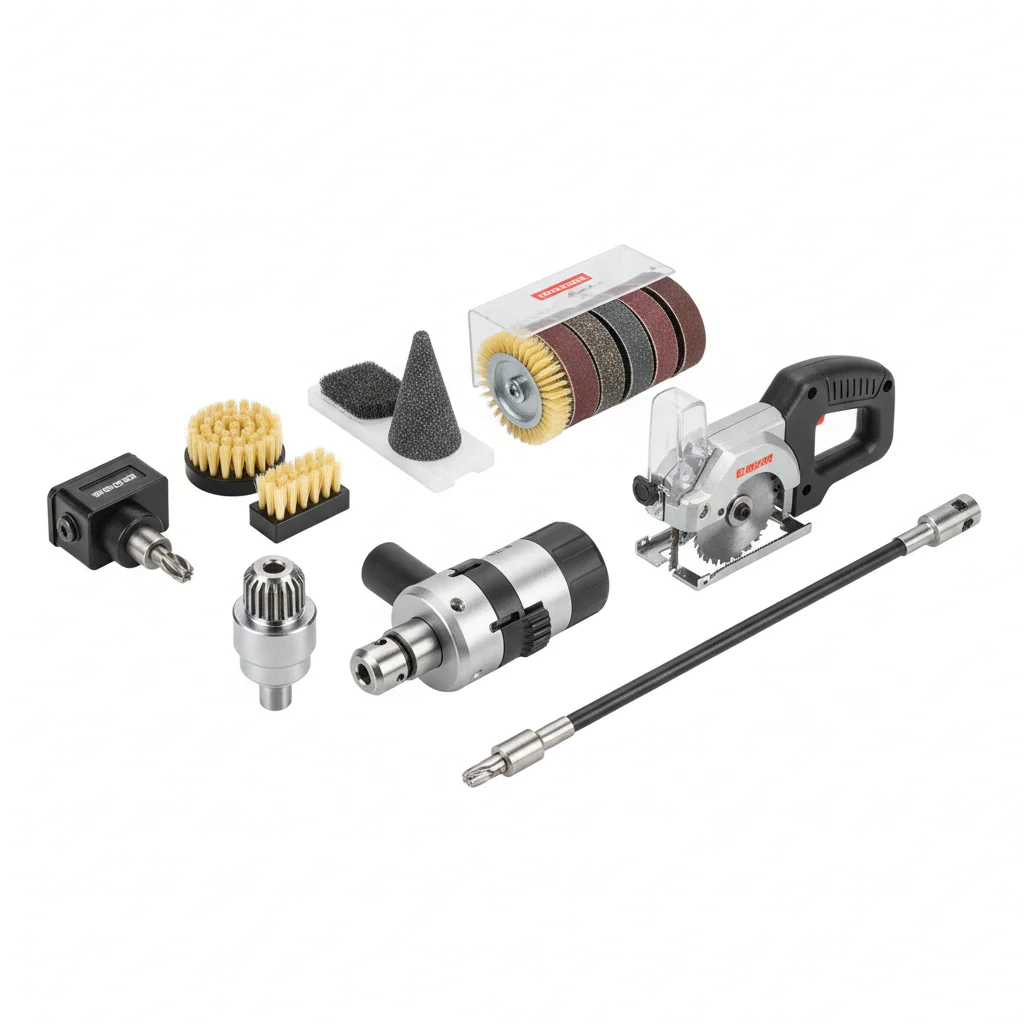
Electric drill attachments significantly expand the utility of your power tool, transforming it from a simple drilling device into a multi-functional workhorse. There are 7 essential types of attachments that can enhance your drill’s versatility, allowing you to tackle a wider range of tasks with greater efficiency and precision.
Understanding the Core Benefits of Drill Attachments
Drill attachments are designed to optimize your existing electric drill, saving you the expense and storage space of dedicated single-purpose tools. They allow for specialized functions, from sanding and polishing to cutting and mixing, all powered by the same motor. This modular approach is particularly beneficial for DIY enthusiasts and professionals who need to adapt quickly to different project requirements without carrying an entire toolbox.
Key Attachment Types for Drilling and Driving
Beyond standard drill bits, several attachments enhance drilling and driving capabilities. Right-angle attachments are invaluable for working in confined spaces, allowing your drill to reach areas a straight drill cannot. Depth stop collars ensure consistent drilling depth, preventing over-drilling and protecting surfaces. For driving, flexible shaft extensions are excellent for reaching awkward angles, while magnetic bit holders keep screws securely in place, reducing dropped fasteners.
- Right-angle attachments for tight spaces
- Depth stop collars for consistent drilling
- Flexible shaft extensions for awkward angles
- Magnetic bit holders for secure screw driving
- Keyless chucks for quick bit changes
Attachments for Surface Preparation and Finishing
|
Our Picks for the Best Electric Drill in 2026
As an Amazon Associate I earn from qualifying purchases.
|
||
| Num | Product | Action |
|---|---|---|
| 1 | PULITUO'S 20V Cordless Drill/Driver, Electric Screwdriver - 2 Batteries, 30Nm, 21+1 Torque, 2 Speed, Keyless 3/8" Chase Drill with LED Light, Kit for Home (Green) |

|
| 2 | BLACK+DECKER 20V MAX* POWERCONNECT Cordless Drill Driver Kit with Drill Bit Set and Sockets, 100 pc. Tool Kit for Home, Battery and Charger Included ,Orange (BDC120VA100) |
|
| 3 | AVID POWER 20V MAX Lithium lon Cordless Drill Set, Power Drill Kit with Battery and Charger, 3/8-Inch Keyless Chuck, Variable Speed, 16 Position and 22pcs Drill Bits (Red) |
|
| 4 | COMOWARE 20V Cordless Drill, Electric Power Drill Set with 1 Battery & Charger, 3/8” Keyless Chuck, 2 Variable Speed, 266 In-lb Torque, 25+1 Position and 34pcs Drill/Driver Bits |
|
| 5 | DEWALT 20V Max Cordless Drill Driver Set, 2 Speed, High Performance Motor, Includes 2 XR 1.3Ah Li-Ion Batteries, Charger and Contractor Bag (DCD771C2) |
|
| 6 | 20V Cordless Drill, Electric Power Drill Set with Battery Charger and Carrying Case, 3/8” Keyless Chuck, 2 Variable Speed, 18+3 Torque, 72pcs Driver Bits and Belt Hook, Red |
|
| 7 | DEWALT 20V MAX Cordless Drill Driver Set, Electric Drill, Brushless 1/2 In 2 Speed, 2.0 Ah Battery and Charger Included, LED Light (DCD777D1) |
|
| 8 | FADAKWALT Cordless Drill Set,12V Power Drill Set with Battery and Charger, Electric Driver/Drill Bits, 3/8'' Keyless Chuck,21+1 Torque Setting, 180 inch-lbs, with LED Electric Drill Set (Green) |
|
| 9 | Hoteche 320W 10mm Torque Drill, 19+1 Torque Settings Corded Electric Drill for Metal (10mm) & Wood (20mm), Yellow, Color Box Packaging |
|
| 10 | Cordless Drill Set, VIWKO 20V Power Drill with Power Pack 2.0Ah and Charger, 3/8-Inch Keyless Chuck Electricdrill, 25+1 Torque, 42pcs Drilldriver Bits/Screws for DIY Projects (Red) |
|
Your electric drill can also become a powerful tool for surface preparation and finishing. Sanding attachments, which typically use hook-and-loop pads, allow you to quickly smooth wood, metal, and other materials. Polishing bonnets, often made of wool or foam, can bring a shine to various surfaces, from car paint to countertops. Wire brush attachments are excellent for removing rust, paint, or grime from metal surfaces, preparing them for further treatment.
Consider the type of material you’ll be working with and the desired finish when selecting these attachments. Always use appropriate safety gear, including eye protection, when operating your drill with these accessories.
Cutting and Grinding Attachments
While not a replacement for dedicated saws or grinders, certain attachments can enable your electric drill to perform light cutting and grinding tasks. Rotary rasps and burrs are useful for shaping wood or soft metals. Some specialized cutting wheels can be attached for light-duty cutting of thin materials, though caution is paramount due to the drill’s lower RPM compared to dedicated cutting tools. Always ensure the attachment is rated for the speed of your drill and the material you intend to cut.
Mixing and Agitating Attachments
For tasks involving liquids or semi-liquids, mixing paddles are indispensable. These attachments are designed to efficiently stir paint, drywall mud, epoxy, and other compounds, ensuring a consistent mixture. They come in various sizes and designs, so choose one appropriate for the volume and viscosity of the material you’re mixing. Using a drill with a variable speed trigger is highly recommended for mixing, allowing you to control the agitation and prevent splashing.
Specialty Attachments for Unique Tasks
Beyond the common types, there are numerous specialty attachments. Pump attachments can turn your drill into a small water pump, useful for draining aquariums or small flooded areas. Sharpening attachments can revive dull drill bits, saving you money on replacements. Even small router attachments exist for light routing work. Exploring these niche options can further expand your drill’s capabilities for specific projects.
Get our weekly buyer guide
Practical specs, not advice. Unsubscribe anytime.
