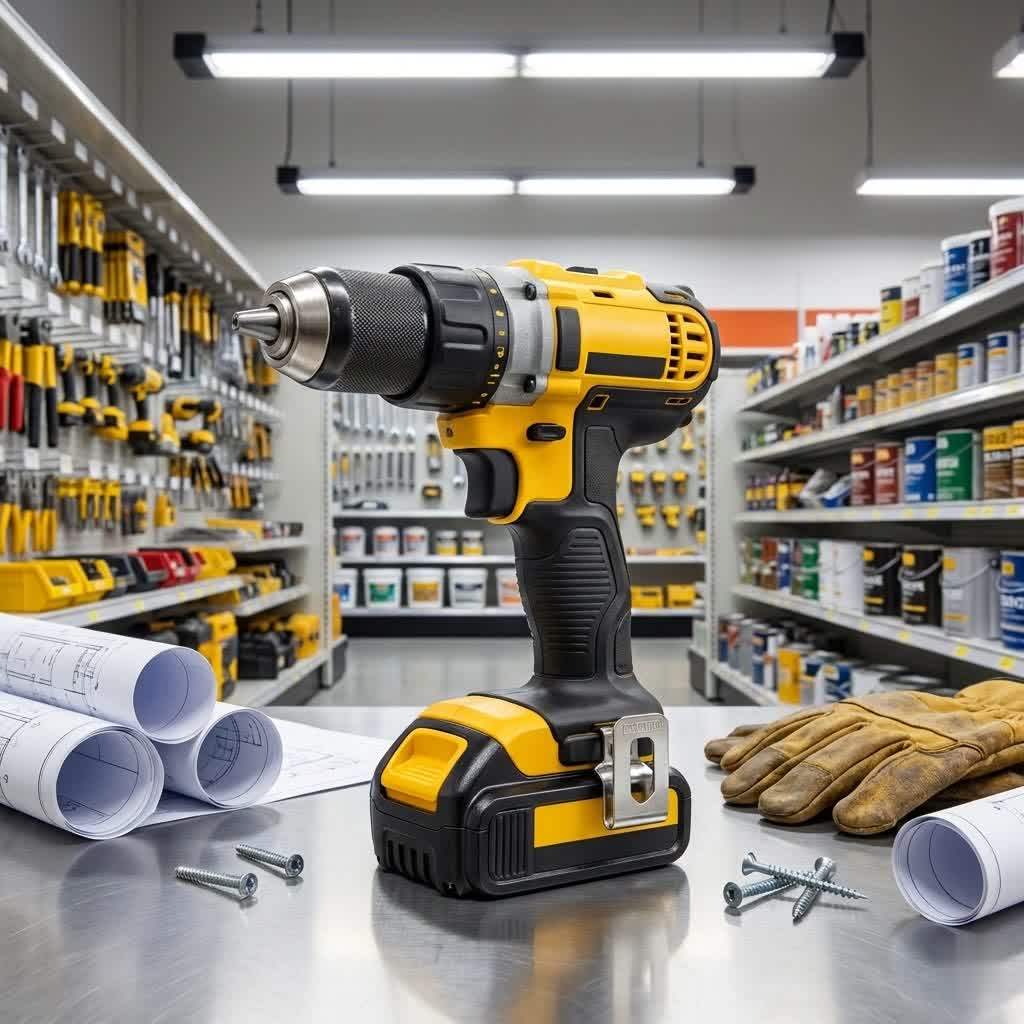
Have you ever faced a home improvement project or a professional task that required precision and power, only to realize you lacked the right tool? An electric hand drill is often the unsung hero in such scenarios, a versatile cornerstone for anyone from the weekend DIY enthusiast to the seasoned construction professional. This indispensable power tool makes light work of drilling holes, driving screws, and performing countless other tasks, transforming daunting jobs into manageable ones. With its diverse range of types and features, understanding the nuances of electric hand drills is key to unlocking efficiency and achieving flawless results. This comprehensive guide will equip you with the knowledge to select the perfect electric hand drill for your needs, use it safely, and maintain it for years of reliable service.
Overview of Electric Hand Drills
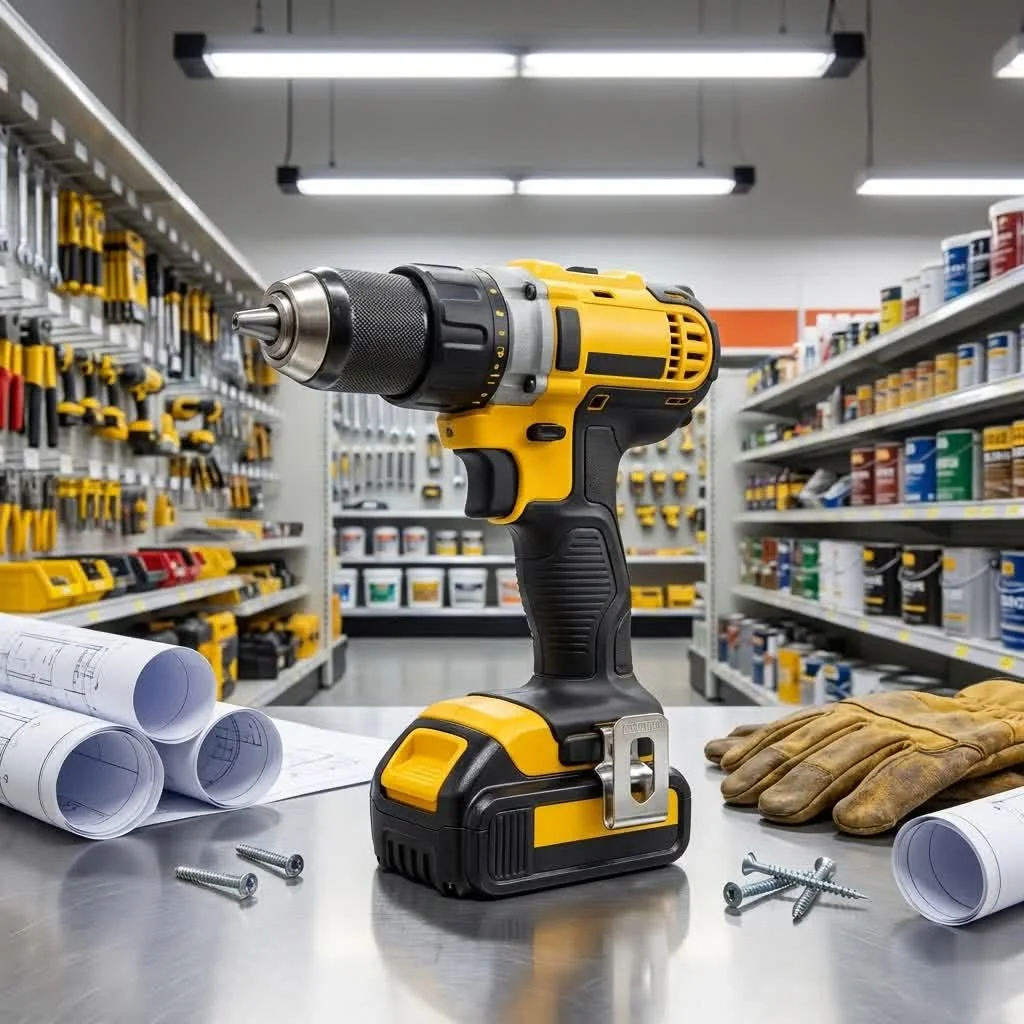
An electric hand drill is a portable power tool primarily designed for drilling holes into various materials and driving fasteners. It is an essential item in any workshop or toolbox, offering significant advantages in speed and power over traditional manual drills. From hanging a picture frame to constructing complex furniture or even tackling heavy-duty construction tasks, the electric drill’s versatility is unmatched. For browse all electric drills articles on this site.
The history of drilling tools dates back thousands of years, evolving from simple hand-powered augers to sophisticated electric devices. The first portable electric drill was invented in 1895 by C&E Fein in Stuttgart, Germany, revolutionizing industrial work. Over the decades, advancements in motor technology, battery power, and ergonomic design have transformed these early, bulky machines into the lightweight, powerful, and user-friendly tools we know today. Modern electric drills come in various forms, each tailored for specific applications, ranging from basic models for light household tasks to specialized units for heavy industrial use. Key categories include corded for constant power, cordless for portability, and specialized types like hammer drills and impact drivers for specific materials and fastening needs.
Detailed Classification of Electric Hand Drills
Understanding the different types of electric hand drills is crucial for selecting the right tool for the job. Each variant is engineered with specific tasks and materials in mind, offering unique advantages and disadvantages.
Hammer Drill
The hammer drill stands out for its ability to tackle tough masonry materials. It combines standard rotational drilling with a rapid, piston-like hammering action along the axis of the bit.
- Advantages: Exceptional for drilling into concrete, brick, stone, and other hard aggregates. Many models also feature a “drill-only” mode, allowing them to function as standard rotary drills for wood or metal.
- Disadvantages: Can be heavier and more powerful than standard drills, making them less suitable for delicate tasks. The hammering action can damage softer materials or thin wood if not used carefully.
- Applications: Ideal for mounting shelves on a brick wall, installing anchors in concrete foundations, or general construction involving masonry.
- Comparison: Unlike a standard rotary drill, it adds an axial impact. It differs from an impact driver, which applies tangential (rotational) impact for fastening, whereas the hammer drill applies axial impact for drilling.
Impact Driver
|
Our Picks for the Best Electric Drill in 2026
As an Amazon Associate I earn from qualifying purchases.
|
||
| Num | Product | Action |
|---|---|---|
| 1 | AVID POWER 20V MAX Lithium lon Cordless Drill Set, Power Drill Kit with Battery and Charger, 3/8-Inch Keyless Chuck, Variable Speed, 16 Position and 22pcs Drill Bits (Red) |

|
| 2 | Cordless Drill Set, VIWKO 20V Power Drill with Power Pack 2.0Ah and Charger, 3/8-Inch Keyless Chuck Electricdrill, 25+1 Torque, 42pcs Drilldriver Bits/Screws for DIY Projects (Red) |
|
| 3 | COMOWARE 20V Cordless Drill, Electric Power Drill Set with 1 Battery & Charger, 3/8” Keyless Chuck, 2 Variable Speed, 266 In-lb Torque, 25+1 Position and 34pcs Drill/Driver Bits |
|
| 4 | FADAKWALT Cordless Drill Set,12V Power Drill Set with Battery and Charger, Electric Driver/Drill Bits, 3/8'' Keyless Chuck,21+1 Torque Setting, 180 inch-lbs, with LED Electric Drill Set (Green) |
|
| 5 | PULITUO'S 20V Cordless Drill/Driver, Electric Screwdriver - 2 Batteries, 30Nm, 21+1 Torque, 2 Speed, Keyless 3/8" Chase Drill with LED Light, Kit for Home (Green) |
|
| 6 | Hoteche 320W 10mm Torque Drill, 19+1 Torque Settings Corded Electric Drill for Metal (10mm) & Wood (20mm), Yellow, Color Box Packaging |
|
| 7 | DEWALT 20V Max Cordless Drill Driver Set, 2 Speed, High Performance Motor, Includes 2 XR 1.3Ah Li-Ion Batteries, Charger and Contractor Bag (DCD771C2) |
|
| 8 | DEWALT 20V MAX Cordless Drill Driver Set, Electric Drill, Brushless 1/2 In 2 Speed, 2.0 Ah Battery and Charger Included, LED Light (DCD777D1) |
|
| 9 | 20V Cordless Drill, Electric Power Drill Set with Battery Charger and Carrying Case, 3/8” Keyless Chuck, 2 Variable Speed, 18+3 Torque, 72pcs Driver Bits and Belt Hook, Red |
|
| 10 | BLACK+DECKER 20V MAX* POWERCONNECT Cordless Drill Driver Kit with Drill Bit Set and Sockets, 100 pc. Tool Kit for Home, Battery and Charger Included ,Orange (BDC120VA100) |
|
While often mistaken for a drill, an impact driver is primarily designed for driving screws and fasteners with high torque. It applies strong, short rotational bursts of power (impacts) when it encounters resistance, preventing cam-out and making it easier to drive long or large screws.
- Advantages: Superior driving power for screws and bolts, less effort required from the user due to the impact mechanism, highly efficient for repetitive fastening tasks. Its compact size often allows access into tight spaces.
- Disadvantages: Not ideal for precision drilling due to its high torque and tendency to over-tighten; less versatile for diverse drilling applications compared to a standard drill. The impact action can be noisy.
- Applications: Assembling furniture, decking projects, installing subflooring, driving lag screws, and any task requiring significant fastening power.
- Comparison: Unlike a hammer drill which hammers axially for drilling into masonry, an impact driver applies rotational impact to drive fasteners. Standard drills offer less torque for driving but excel at precise hole drilling.
Rotary Drill (Power Drill)
The rotary drill, often simply called a power drill, is the most common and versatile type of electric drill. It primarily rotates a drill bit to create holes in materials like wood, metal, plastic, and drywall, and with appropriate accessories, can also drive screws. These come in both corded and cordless varieties.
- Advantages: Highly versatile for a wide range of drilling tasks, often lightweight and easy to handle, comes in various power levels suitable for different needs. Cordless models offer excellent portability.
- Disadvantages: Less effective for drilling into very hard materials like concrete (without a hammer function), and provides less torque for heavy-duty fastening than an impact driver.
- Applications: General household repairs, drilling pilot holes, light fastening, woodworking, metalworking, and DIY projects.
- Comparison: The fundamental drilling tool. It forms the basis from which hammer drills (adding axial impact) and impact drivers (adding rotational impact) diverge for specialized tasks.
Magnetic Drill
A magnetic drill, often referred to as a mag drill, is a highly specialized tool designed for drilling precise holes into thick metal, particularly steel. It features a powerful electromagnetic base that securely attaches to the ferrous workpiece, providing exceptional stability and accuracy.
- Advantages: Offers superior precision and stability for drilling large-diameter holes in heavy steel, often using annular cutters. Reduces fatigue due to its self-feeding mechanism in some models.
- Disadvantages: Heavy and less portable than other hand drills, highly specialized for metalworking, and generally more expensive.
- Applications: Steel fabrication, bridge building, structural engineering, shipbuilding, and other heavy industrial metalworking applications where large, accurate holes are required.
- Comparison: A niche tool compared to standard hand drills, impact drivers, or hammer drills, which are more general-purpose. Its primary differentiating factor is its magnetic base and specialization in heavy metal.
Comparison Table of Electric Hand Drills
| Drill Type | Primary Use | Key Feature | Common Materials | Pros | Cons |
|---|---|---|---|---|---|
| Rotary Drill | Drilling holes, light fastening | Rotational motion | Wood, metal, plastic, drywall | Versatile, affordable, lightweight | Limited for masonry, less torque for heavy driving |
| Hammer Drill | Drilling into masonry | Rotational + axial hammering action | Concrete, brick, stone | Excellent for hard materials, dual function | Heavier, less precise for wood, can damage soft materials |
| Impact Driver | Driving screws & fasteners | High rotational impact torque | Wood, metal, composites | High torque, efficient driving, compact | Poor for precision drilling, noisy, can overtighten |
| Magnetic Drill | Heavy-duty metal drilling | Electromagnetic base, highly stable drilling | Thick steel | High precision, stability, power for steel | Heavy, specialized, expensive, limited application |
This table provides a quick reference to help distinguish between the primary functions and capabilities of each electric hand drill type. Selecting the correct tool ensures efficiency, safety, and optimal results for your specific projects.
Guide to Choosing the Right Electric Hand Drill
Choosing the ideal electric hand drill involves evaluating several factors to ensure it aligns with your specific needs and budget.
Determine Usage Needs
Before anything else, consider what you’ll primarily be using the drill for.
- Purpose: Are you a DIY enthusiast tackling occasional home repairs, or a professional needing a reliable tool for daily use? Do you need it for drilling, driving, or both?
- Materials: What materials will you be working with most often? Wood, metal, plastic, drywall, concrete, or a combination?
- Frequency: Will the drill be used daily, weekly, or just a few times a year? This impacts the required durability and feature set.
Budget
Your budget will significantly narrow down your options.
- Entry-Level: Affordable drills are suitable for light, occasional use and basic DIY tasks.
- Mid-Range: Offers a balance of features, power, and durability, great for regular home improvement projects.
- Professional-Grade: Designed for heavy, continuous use, offering superior power, durability, and advanced features, justifying a higher price point. Investing in a quality tool can save money in the long run through increased efficiency and longevity.
Key Technical Specifications
Understanding these specifications will help you compare different models effectively.
- Power:
- Corded drills: Measured in amps (A). Higher amps generally mean more power (e.g., 6-8A for general use, 10-12A for heavy-duty).
- Cordless drills: Measured in volts (V). Higher voltage (e.g., 12V, 18V, 20V) typically indicates more power and longer runtime.
- Speed (RPM – Revolutions Per Minute): Variable speed triggers are crucial for control. Higher RPM is good for drilling small holes in soft materials, while lower RPM is better for driving screws or drilling large holes in hard materials. Many drills offer multiple gear settings for optimized speed and torque.
- Torque (Nm – Newton-meters or in-lbs): Represents the rotational force. Higher torque is essential for driving large fasteners or drilling into dense materials. Look for clutch settings that allow you to adjust torque, preventing overtightening or stripping screws.
- Chuck Size: The chuck holds the drill bit. Common sizes are 3/8-inch (for general use) and 1/2-inch (for heavy-duty drilling and larger bits). Keyless chucks are convenient for quick bit changes, while keyed chucks offer a more secure grip for heavy applications.
- Functions: Decide if you need drill-only, drill/driver, or drill/hammer drill functions based on your material needs.
Brand and Reliability
Opting for reputable brands often ensures quality, durability, and better customer support.
- Leading Brands: DeWalt, Makita, Bosch, Milwaukee, Ryobi, Black+Decker are widely recognized for their reliable electric drills.
- Reviews: Always check user reviews and professional ratings to gauge real-world performance and common issues. A good warranty and accessible service network are also indicators of a brand’s commitment to quality.
Additional Features
Modern drills often come with features that enhance usability and safety.
- LED Work Light: Illuminates the workpiece, especially useful in dimly lit areas.
- Variable Speed Control: Allows precise control over drilling speed, crucial for different materials and tasks.
- Anti-Vibration Technology: Reduces user fatigue during prolonged use, especially with hammer drills.
- Battery Technology (for cordless drills): Lithium-ion (Li-ion) batteries are standard, offering good power-to-weight ratio and no memory effect. Consider battery capacity (Ah – Amp-hours) for longer runtime. Brushless motors offer better efficiency, more power, and longer tool life compared to brushed motors.
“Choosing the right drill is about matching the tool’s capabilities to your project’s demands. Over-specifying can lead to unnecessary expense and bulk, while under-specifying will lead to frustration and poor results.” – John Peterson, Master Carpenter and Tool Expert
Safe Use and Maintenance Tips for Electric Hand Drills
Ensuring safety and proper maintenance are paramount for extending the lifespan of your electric hand drill and preventing accidents.
How to Use an Electric Hand Drill Correctly and Safely
- Read the Manual: Always start by reading the manufacturer’s instruction manual for specific operating procedures and safety warnings.
- Wear Personal Protective Equipment (PPE):
- Eye Protection: Safety glasses or goggles are essential to protect against flying debris.
- Hearing Protection: Earplugs or earmuffs are recommended, especially with hammer drills or impact drivers.
- Gloves: Protect your hands, but ensure they don’t interfere with grip or get caught in moving parts.
- Secure Your Workpiece: Always clamp or brace the material you’re drilling into. Never hold it by hand, as it can spin dangerously.
- Use the Right Bit: Select the correct drill bit type and size for the material and hole diameter. Ensure the bit is sharp and free from damage.
- Adjust Settings: Set the drill to the appropriate speed and torque for the material. Start with a slow speed to begin the hole, then increase as needed.
- Maintain a Firm Grip: Hold the drill with both hands if possible, especially for larger drills or tougher materials, to maintain control.
- Apply Steady Pressure: Let the drill do the work. Don’t force it, as excessive pressure can overheat the motor, dull the bit, or cause the drill to bind.
- Beware of Kickback: If the bit jams, the drill can twist violently (kickback). Be prepared to release the trigger immediately.
- Unplug/Remove Battery: Always unplug a corded drill or remove the battery from a cordless drill before changing bits, making adjustments, or performing maintenance.
- Clear Work Area: Keep your workspace clean and free of clutter to prevent trips or entanglement with power cords.
How to Maintain Your Electric Hand Drill to Extend its Lifespan
- Clean Regularly: After each use, wipe down the drill to remove dust, dirt, and debris. Pay special attention to ventilation slots to prevent motor overheating.
- Inspect Cords and Plugs (Corded Drills): Check for any cuts, fraying, or damage to the power cord and plug. Replace immediately if damaged.
- Battery Care (Cordless Drills):
- Store batteries in a cool, dry place.
- Avoid fully draining or overcharging lithium-ion batteries. Follow manufacturer recommendations for charging cycles.
- Do not store batteries in extreme temperatures.
- Lubrication: Some drills may require periodic lubrication of gears or moving parts. Consult your owner’s manual for specific instructions.
- Bit Storage: Store drill bits and accessories properly to prevent damage and keep them organized. Dull bits can be sharpened or replaced.
- Proper Storage: Store your electric drill in its original case or a designated toolbox in a dry, secure location, away from moisture and extreme temperatures.
- Professional Servicing: If you notice any unusual noises, vibrations, or performance issues, consider having your drill inspected by a qualified service technician.
Conclusion
The electric hand drill is more than just a power tool; it’s an indispensable partner in countless projects, from the simplest household task to the most demanding professional undertaking. By understanding the different types available – from the versatile rotary drill to the powerful hammer drill, the efficient impact driver, and the specialized magnetic drill – you can confidently select the tool perfectly matched to your specific needs. Paying close attention to key specifications, considering your budget, and choosing reputable brands will further ensure you make a wise investment. safe operation and diligent maintenance are crucial not only for achieving excellent results but also for ensuring the longevity of your electric hand drill and your personal safety. With the right knowledge and a commitment to best practices, your electric hand drill will serve you reliably for years to come. What project will you tackle next with your perfectly chosen electric hand drill?
Frequently Asked Questions
What’s the main difference between a drill and an impact driver?
A standard drill rotates to create holes and can drive screws, but an impact driver specializes in driving fasteners. Impact drivers deliver high rotational force in short, powerful bursts (impacts) when encountering resistance, making them far more effective for driving long or tough screws without stripping them, but less suitable for precise drilling.
Can I use a hammer drill for wood?
Yes, most hammer drills have a “drill-only” mode that disables the hammering action, allowing them to function as a standard rotary drill. However, for delicate woodworking tasks, a dedicated rotary drill might offer finer control and less bulk. Using the hammer function on wood will likely cause splintering and damage.
How do I choose between a corded and cordless drill?
Choose a corded drill for continuous, heavy-duty tasks where consistent power is needed and an outlet is available. They tend to be lighter without a battery and offer unlimited runtime. Opt for a cordless drill for maximum portability, convenience, and working in areas without power outlets. Consider battery voltage and amp-hours for power and runtime when choosing cordless.
Get our weekly buyer guide
Practical specs, not advice. Unsubscribe anytime.

This guide really helped me pick out a good electric hand drill. I went with a brushed motor model because it was more in my budget, and it’s been great for general home repairs. It’s a bit heavier than I expected, but the power it delivers for driving screws is fantastic. I’m glad I finally invested in a decent one.
I’ve been using my new cordless drill for a few weeks now, and it’s a game-changer for my DIY projects. The variable speed trigger is incredibly useful for delicate tasks, and the battery life is surprisingly long. I used it to assemble some new furniture and hang several shelves, and it handled everything with ease. Definitely recommend it for anyone looking for a reliable power tool.
My old drill finally gave out, so I was in the market for a new one. I focused on models with a good clutch setting, and the one I chose has been perfect. It prevents over-driving screws into softer materials, which saves a lot of headaches. It’s made my woodworking projects so much smoother and more professional-looking.
I got a new hammer drill for some masonry work, and while it’s powerful, the chuck sometimes loosens up on me. It’s a minor annoyance, but I have to re-tighten it more often than I’d like, especially when drilling into concrete. Otherwise, it gets the job done and the ergonomic grip is pretty comfortable for extended use.