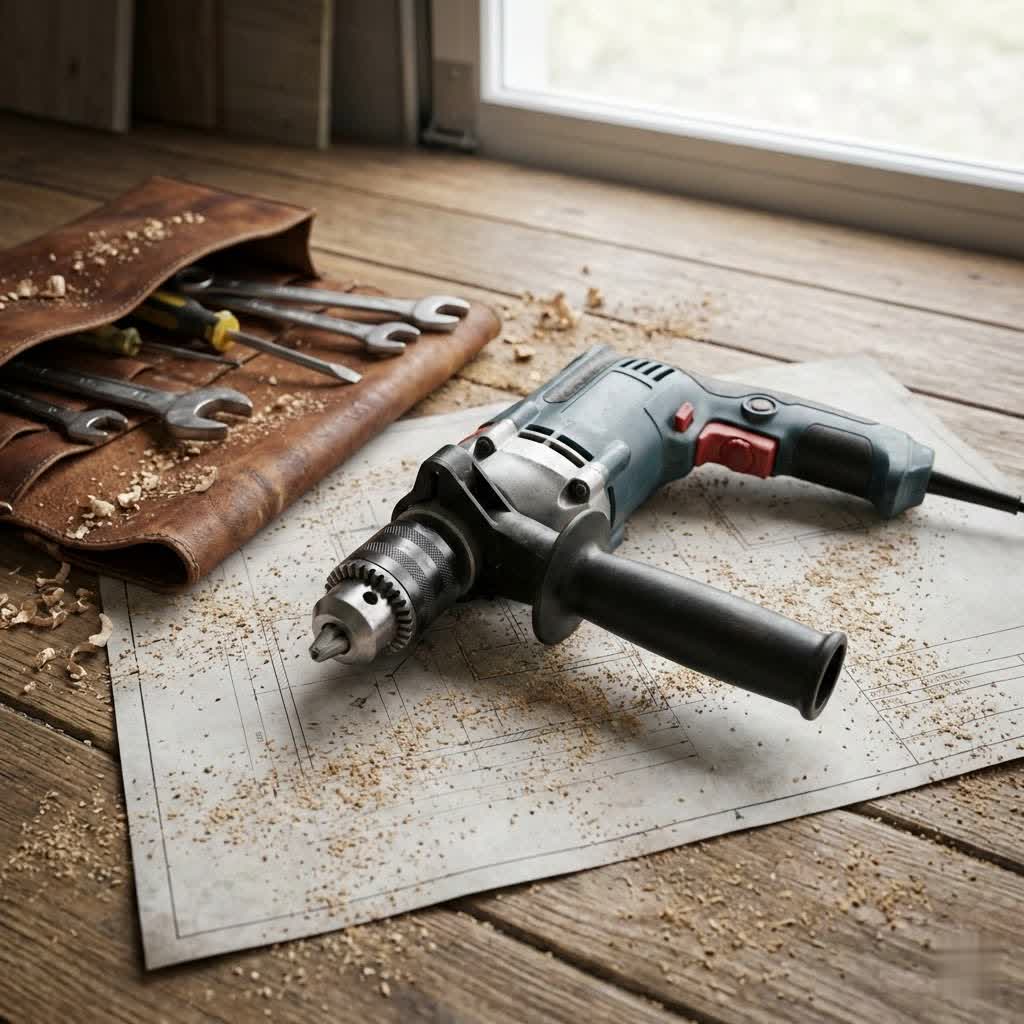
Choosing the right electric drill can transform your woodworking, metalworking, construction, or home improvement projects, making demanding tasks feel effortless. For decades, Makita has stood as a beacon of reliability and innovation in the power tool industry, consistently delivering tools that combine brute strength with refined control. If you’re seeking a drill that promises longevity, exceptional performance, and user-centric design, understanding the Makita electric drill lineup is your first crucial step. This comprehensive guide will equip you with the knowledge to select the perfect Makita drill to meet your specific needs, ensuring every project is completed with confidence and precision.
Overview of Makita Electric Drills
Makita’s journey in power tool manufacturing began over a century ago, and their reputation for quality craftsmanship and cutting-edge technology is well-earned. A pivotal moment in their history was the introduction of the world’s first cordless drill in the 1970s, a testament to their pioneering spirit. This commitment to innovation continues today, with Makita drills being synonymous with power, versatility, and durability across both corded and cordless platforms. The brand focuses on robust, high-quality motors that deliver ample power for tough materials, paired with advanced battery technologies and ergonomic designs that minimize fatigue and enhance productivity. Their distinctive blue and black tools are a common sight in workshops, construction sites, and homes worldwide. For explore our electric drills reviews on this site.
Detailed Classification of Makita Electric Drills
Makita offers a diverse range of electric drills, each engineered for specific tasks and materials. Understanding these classifications is key to choosing a tool that not only performs but excels in your intended application.
Hammer Drills
Makita’s hammer drills, often referred to as combi drills, are versatile powerhouses designed for a broad spectrum of drilling applications. These tools combine rotary drilling with a percussive hammering action, making them exceptionally effective for drilling into tough materials like brickwork, stone, and concrete. They also function as standard drill drivers for wood and metal, offering a flexible solution for many trades.
- Advantages: Their primary benefit is versatility, allowing users to switch between drilling, driving, and hammer functions. Brushless models often deliver high torque (e.g., up to 130Nm) and efficient performance. They are more compact than dedicated SDS drills, making them suitable for light to medium masonry tasks without excessive bulk.
- Disadvantages: While capable for light masonry, they are generally less powerful and efficient for heavy-duty concrete work compared to specialized SDS rotary hammers.
- Applications: Ideal for general construction, DIY enthusiasts tackling mixed materials, installing fixtures into masonry, and drilling into wood, metal, and plastic.
- Comparison: Unlike a standard drill driver that only rotates, a hammer drill adds an impact force. However, for continuous, heavy-duty drilling into concrete, an SDS (Slotted Drive System) drill with its piston-driven hammering mechanism offers superior speed and impact energy.
Drill Drivers
|
Our Picks for the Best Electric Drill in 2026
As an Amazon Associate I earn from qualifying purchases.
|
||
| Num | Product | Action |
|---|---|---|
| 1 | DEWALT 20V MAX Cordless Drill Driver Set, Electric Drill, Brushless 1/2 In 2 Speed, 2.0 Ah Battery and Charger Included, LED Light (DCD777D1) |

|
| 2 | 20V Cordless Drill, Electric Power Drill Set with Battery Charger and Carrying Case, 3/8” Keyless Chuck, 2 Variable Speed, 18+3 Torque, 72pcs Driver Bits and Belt Hook, Red |
|
| 3 | FADAKWALT Cordless Drill Set,12V Power Drill Set with Battery and Charger, Electric Driver/Drill Bits, 3/8'' Keyless Chuck,21+1 Torque Setting, 180 inch-lbs, with LED Electric Drill Set (Green) |
|
| 4 | Cordless Drill Set, VIWKO 20V Power Drill with Power Pack 2.0Ah and Charger, 3/8-Inch Keyless Chuck Electricdrill, 25+1 Torque, 42pcs Drilldriver Bits/Screws for DIY Projects (Red) |
|
| 5 | DEWALT 20V Max Cordless Drill Driver Set, 2 Speed, High Performance Motor, Includes 2 XR 1.3Ah Li-Ion Batteries, Charger and Contractor Bag (DCD771C2) |
|
| 6 | AVID POWER 20V MAX Lithium lon Cordless Drill Set, Power Drill Kit with Battery and Charger, 3/8-Inch Keyless Chuck, Variable Speed, 16 Position and 22pcs Drill Bits (Red) |
|
| 7 | PULITUO'S 20V Cordless Drill/Driver, Electric Screwdriver - 2 Batteries, 30Nm, 21+1 Torque, 2 Speed, Keyless 3/8" Chase Drill with LED Light, Kit for Home (Green) |
|
| 8 | Hoteche 320W 10mm Torque Drill, 19+1 Torque Settings Corded Electric Drill for Metal (10mm) & Wood (20mm), Yellow, Color Box Packaging |
|
| 9 | COMOWARE 20V Cordless Drill, Electric Power Drill Set with 1 Battery & Charger, 3/8” Keyless Chuck, 2 Variable Speed, 266 In-lb Torque, 25+1 Position and 34pcs Drill/Driver Bits |
|
| 10 | BLACK+DECKER 20V MAX* POWERCONNECT Cordless Drill Driver Kit with Drill Bit Set and Sockets, 100 pc. Tool Kit for Home, Battery and Charger Included ,Orange (BDC120VA100) |
|
Makita drill drivers are the most common and arguably the most indispensable tools for many users, from homeowners to professional tradespeople. These drills are designed for drilling holes into various materials and driving or removing screws. They typically feature multiple clutch settings to prevent over-driving screws and damaging materials.
- Advantages: They are generally lighter and more compact than hammer drills, making them easier to handle for extended periods and in tight spaces. Excellent for precision work and common tasks.
- Disadvantages: Lack the hammering function for masonry work.
- Applications: Perfect for assembling furniture, installing shelving, drilling pilot holes in wood and metal, and general fastening tasks.
- Comparison: These are the foundational drills, offering rotary action for drilling and driving, without the added impact of a hammer drill or the rotational impacts of an impact driver.
Impact Drivers
Makita impact drivers are specialized tools designed for high-volume fastening applications. They deliver powerful, rapid rotational impacts that drive screws much more efficiently and with less wrist strain than a standard drill driver. The internal hammering mechanism engages when resistance is met, providing bursts of powerful turning force.
- Advantages: Exceptional torque for driving long screws into dense materials. The impact action reduces cam-out (the bit slipping from the screw head) and minimizes user fatigue. They are often very compact and lightweight.
- Disadvantages: Not ideal for precision drilling due to their impactful action. The noise level can also be higher than traditional drills.
- Applications: Driving deck screws, fastening large lag bolts, assembling metal framing, and any task requiring significant fastening power.
- Comparison: While drill drivers offer continuous rotation, impact drivers provide short, powerful bursts of torque, making them superior for driving fasteners but less suitable for delicate drilling.
Specialty Drills
Makita also produces a range of specialty drills tailored for unique applications:
- Rotary Drills: These are dedicated drills designed purely for rotation, often used in applications where hammering is not required or desired, such as precise drilling in wood, plastics, and metals. They are known for smooth, consistent operation.
- Angle Drills: Featuring a compact head set at a right angle to the body, these drills are indispensable for working in extremely tight or confined spaces where a standard drill cannot fit. They are excellent for electricians, plumbers, and cabinet installers.
- Magnetic Base Drills: Robust, heavy-duty drills primarily used for precise drilling into steel and other metals. They feature a powerful magnetic base that secures the drill to the workpiece, ensuring stability and accuracy for larger diameter holes, often found in fabrication and construction settings.
- SDS Drills (Rotary Hammers): These are Makita’s heaviest-duty drilling solutions for concrete and masonry. Unlike hammer drills, SDS drills use a piston mechanism to deliver a much more powerful, pneumatic hammering action, making quick work of demanding concrete drilling and chipping tasks.
Understanding Makita’s Advanced Technology
Makita’s reputation for excellence is deeply rooted in its continuous innovation in power tool technology. Key advancements in motor design and battery systems set their drills apart.
Corded vs. Cordless: The Power vs. Portability Debate
The fundamental choice between a corded and cordless Makita drill depends on your priorities:
- Corded Drills:
- Advantages: Offer consistent, uninterrupted power without worrying about battery life. Generally lighter since they don’t carry a heavy battery pack. Often more affordable for comparable power.
- Disadvantages: Limited by the length of the power cord and proximity to an outlet. Less mobile and can be inconvenient in remote locations.
- Cordless Drills:
- Advantages: Unmatched mobility and flexibility, allowing you to work anywhere without power outlet constraints. Modern battery technology provides impressive power and runtime.
- Disadvantages: Typically more expensive due to battery and charger costs. Battery life can be a limiting factor, requiring spare batteries for extended work.
Brushless vs. Brushed Motors: Efficiency and Longevity
The type of motor in your Makita drill significantly impacts its performance and lifespan.
- Brushed Motors: These are traditional motors with carbon brushes that create friction and heat. They are less efficient, tend to wear out faster due to brush degradation, and convert less energy into actual power.
- Brushless Motors: Makita’s brushless motors are electronically controlled, eliminating physical brushes.
- Benefits: Up to 50% longer runtime per charge, cooler operation, significantly longer tool life, and more efficient power delivery. They can also dynamically adjust torque and RPM to match the application, providing smoother operation. Many of Makita’s top-tier drills feature this technology.
Makita’s Battery Systems: LXT, XGT, and CXT
Makita is a pioneer in battery technology, with several interconnected systems designed to meet diverse professional and DIY needs.
- LXT (Lithium-ion eXtreme Technology): Launched in 2005, LXT is Makita’s core 18V (and 36V, using two 18V batteries) cordless platform. It is the world’s most extensive compatible 18V slide-style battery system, boasting over 350 tools.
- Key Features:
Battery Protection Technologyensures real-time communication between the tool, battery, and charger, protecting against overload, over-discharge, and overheating. This intelligent management extends both battery and tool life, ensuring consistent power and faster charging. LXT batteries come in various capacities, from compact 2.0Ah for lightweight tasks to high-capacity 6.0Ah for maximum runtime.
- Key Features:
- XGT (40VMax/80VMax): Introduced in 2020, the XGT platform is engineered for the most demanding, industrial applications. It focuses on delivering extremely high power and durability.
- Key Features: XGT tools utilize purpose-built brushless motors with enhanced windings for increased power output. Batteries are designed for extreme environments with waterproof structures, heavy-duty casings, and shock-absorbing housing (IPX4 rated). The
Smart System Technologyprovides digital communication between battery, tool, and charger for optimized performance, faster charging, and protection, offering up to twice the sustained power for heavy-duty tasks.
- Key Features: XGT tools utilize purpose-built brushless motors with enhanced windings for increased power output. Batteries are designed for extreme environments with waterproof structures, heavy-duty casings, and shock-absorbing housing (IPX4 rated). The
- CXT (12VMax): A more compact 12V platform for lighter-duty tasks and tools where smaller size and reduced weight are paramount, such as compact drill drivers and power screwdrivers. These are perfect for quick, everyday fixes and tight spaces.
Key Factors When Choosing Your Makita Electric Drill
Selecting the ideal Makita drill requires thoughtful consideration of several critical factors. Your unique needs, the nature of your projects, and your budget will all play a role.
Define Your Usage Needs
Before anything else, clarify what you’ll primarily use the drill for.
- Purpose: Are you mainly drilling holes, driving screws, mixing materials, or breaking concrete?
- Materials: What types of materials will you be working with most often (wood, drywall, metal, brick, concrete)?
- Frequency: Will you be using the drill daily for professional work, or occasionally for home DIY projects? This influences the required durability and power. For example, a professional might need a robust 18V LXT combi drill for daily use, while a DIYer might find a 12V CXT drill driver sufficient for occasional tasks.
Power, Torque, and Speed
These specifications are crucial indicators of a drill’s capability:
- Power (Watts/Volts): For corded drills, wattage (e.g., 750W-1500W) indicates raw power. For cordless drills, voltage (e.g., 12V, 18V, 40V) signifies the power platform. Higher numbers generally mean more capability for demanding jobs.
- Torque (Newton-meters or Inch-pounds): Represents the rotational force. Higher torque is essential for driving large screws, drilling big holes, or working with dense materials. Makita drills can offer significant torque, with some models exceeding 100Nm.
- Speed (RPM – Rotations Per Minute): Determines how fast the bit spins. Higher RPM is ideal for faster drilling in softer materials, while lower speeds with higher torque are needed for driving fasteners and drilling in harder materials. Many Makita drills feature variable speed triggers and multiple gear settings (e.g., 0-550 RPM on low speed, 0-1,800 RPM on high speed) for optimal control.
Battery Voltage and Capacity (Ah)
For cordless Makita drills, the battery is paramount.
- Voltage: (12V, 18V, 40V) directly correlates with the tool’s potential power output. Match the voltage to the demanding nature of your tasks.
- Capacity (Amp-hours – Ah): Determines how long a battery will last on a single charge. Higher Ah ratings (e.g., 5.0Ah or 6.0Ah) provide longer runtime, reducing interruptions. Investing in multiple batteries is a wise strategy for continuous work.
Ergonomics and Comfort
A powerful drill is only effective if it’s comfortable to use. Makita excels in ergonomic design.
- Weight and Balance: Lighter, well-balanced drills reduce fatigue during extended use or overhead work.
- Grip: Soft-touch rubberized handles improve comfort and control.
- Compactness: Smaller designs allow access to confined spaces. Always try to hold a drill before buying if possible, to assess how it feels in your hand.
Budget and Value
Makita drills range in price, from entry-level DIY models to high-end professional tools.
- Determine Your Budget: While it’s tempting to opt for the cheapest option, consider the long-term value. Makita tools are renowned for their durability, often justifying a higher initial investment with years of reliable service.
- Factor in Accessories: Remember to account for batteries, chargers, and drill bits if they’re not included in a kit.
Essential Features to Look For
Modern Makita drills come with a host of features that enhance functionality and safety:
- LED Work Light: Illuminates the work area, crucial for low-light conditions.
- Keyless Chuck: Allows for quick and easy bit changes without a chuck key.
- Clutch Settings: Prevent over-driving screws and damaging materials.
- Variable Speed Trigger: Offers precise control over drilling and driving speeds.
- Belt Hook: Convenient for keeping the tool accessible.
- Extreme Protection Technology (XPT): Provides enhanced resistance to dust and moisture in harsh job site conditions.
- Star Protection Computer Controls: Protects the tool and battery from overload, over-discharge, and overheating.
Best Practices for Using and Maintaining Your Makita Electric Drill
To ensure the longevity and safe operation of your Makita electric drill, follow these essential usage and maintenance guidelines.
- Always Prioritize Safety: Wear appropriate personal protective equipment (PPE), including safety glasses, hearing protection, and gloves. Secure your workpiece firmly to prevent it from spinning.
- Select the Correct Bit: Using the right drill bit for the material and application is paramount. A wood bit won’t effectively drill metal, and a standard twist bit will struggle with concrete.
- Start Slow and Steady: When starting a hole, begin at a slow speed to prevent the bit from wandering. Gradually increase speed as the bit bites into the material.
- Apply Appropriate Pressure: Let the drill do the work. Excessive force can overheat the motor, dull the bit, or even cause kickback, especially with high-torque drills. For powerful models, consider using a side handle to maintain control.
- Avoid Overheating: For intensive tasks, take short breaks to allow the drill and bit to cool down. This extends the life of both.
- Battery Care (for Cordless Drills):
- Store batteries in a cool, dry place.
- Avoid completely draining lithium-ion batteries; charge them before they are fully depleted.
- Use only genuine Makita chargers and batteries for optimal performance and safety. Having multiple charged batteries on hand minimizes downtime on the job.
- Regular Cleaning: After each use, wipe down your drill to remove dust and debris. Keep the air vents clear to ensure proper cooling.
- Inspect for Wear: Periodically check the chuck, cord (for corded drills), and housing for any signs of damage or wear. Address issues promptly to prevent further problems.
“A reliable electric drill is the backbone of any serious toolkit. Makita’s commitment to durability and advanced technology means you’re investing in a tool that truly lasts and performs, project after project.” – Admin, ReviewsByM.com, Experienced Power Tool Technician
Conclusion
Makita electric drills embody a legacy of innovation, durability, and ergonomic design, making them a trusted choice for both seasoned professionals and dedicated DIY enthusiasts. From the versatile combi drill to the mighty impact driver, and across their groundbreaking LXT and XGT battery platforms, Makita offers a precisely engineered solution for virtually every drilling and fastening challenge. By understanding the different types, appreciating the advanced technologies like brushless motors and intelligent battery systems, and carefully considering your specific project needs, you can confidently select a Makita drill that empowers you to achieve superior results. Investing in the right Makita drill means investing in power, precision, and the peace of mind that your tool is built to last.
Which Makita drill will be the next essential addition to your toolkit?
Frequently Asked Questions
Which Makita drill is best for heavy-duty applications?
For heavy-duty applications, Makita’s 40V XGT platform offers the most robust solutions, such as the Makita GPH01/GPH02 brushless hammer drills, which provide exceptional power and torque. Alternatively, within the 18V LXT lineup, models like the DHP486Z or DHP481Z combi drills are highly regarded for their robust construction and high torque output, suitable for demanding tasks in construction and professional settings.
What is the difference between Makita’s 18V LXT and 40V XGT platforms?
The 18V LXT platform is Makita’s extensive professional line, offering over 350 compatible tools designed for a wide range of tasks, balancing power with portability and ergonomics. The 40V XGT platform is a newer, heavy-duty line engineered for more industrial, high-demand applications, providing significantly greater power and runtime for tasks like large-scale demolition, while featuring enhanced durability and advanced smart technology.
Are Makita drills suitable for DIY projects or primarily for professional use?
Makita drills cater to both DIY enthusiasts and professionals. While models from the LXT and XGT lines are favored by professionals for their power, durability, and advanced features, Makita also offers compact 12V CXT drills and more affordable 18V LXT options that are perfectly suited for home renovation, assembly, and general DIY tasks, providing excellent quality and ease of use for any skill level.
How often should I charge my Makita battery?
For optimal battery health and longevity, especially with Makita’s lithium-ion batteries (LXT, XGT, CXT), it’s recommended to charge them before they are completely drained. Avoid storing batteries at a very low charge for extended periods. Makita’s intelligent chargers quickly and efficiently charge batteries, often in under an hour, and communicate with the battery to prevent overcharging.
What does “brushless motor” mean for my drill?
A brushless motor in your Makita drill signifies a significant upgrade. It means the drill operates without carbon brushes, reducing friction, heat, and wear. This translates to several benefits: up to 50% longer runtime per battery charge, a cooler and more efficient motor, a longer overall tool lifespan, and often more compact tool designs with increased power and torque for tougher jobs.
Get our weekly buyer guide
Practical specs, not advice. Unsubscribe anytime.
